
Spergularia azorica
Spergularia azorica
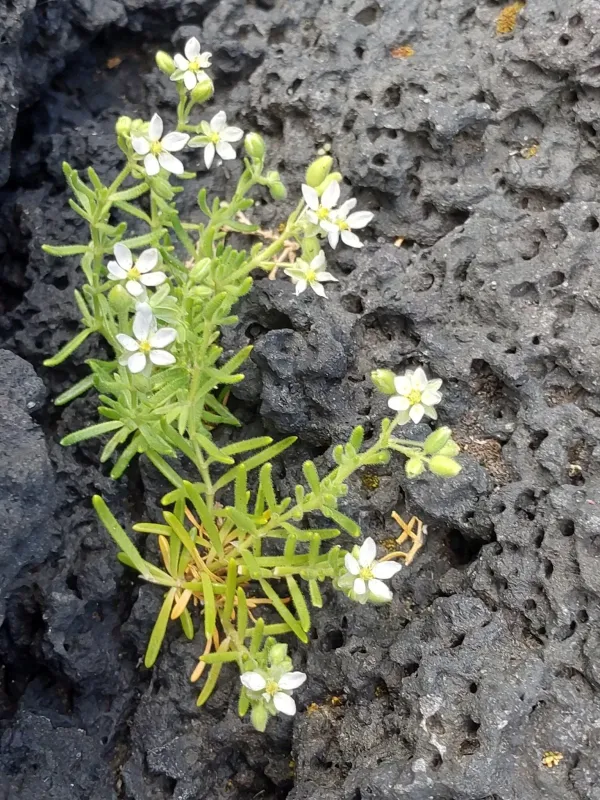
Description
Sowing dates
Spergularia azorica belongs to the Caryophyllaceae family and is native to the Azores islands. As a ground-cover species, it is often propagated by seeds sown in the early spring once the soil temperature consistently reaches 12–15 degrees Celsius. Direct seeding into well-prepared soil provides the best start for this plant.
The seeds require light for optimal germination, so they should be covered with only a thin layer of fine substrate or sand. Maintaining a consistent level of moisture during the germination period is critical, and the use of a fine mist spray is recommended to prevent seed displacement.
For ornamental purposes, seedlings can be started in trays or plug cells indoors and transplanted once the danger of frost has passed. This approach ensures more uniform spacing and quicker establishment in the final growing location compared to direct seeding.
Young plants should be hardened off before being placed into the open field to improve their environmental resilience. Once established, the species demonstrates a strong ability to spread, effectively covering open patches of soil with its dense, mat-forming foliage.
The ideal planting density depends on the desired speed of coverage, typically requiring 10 to 15 plants per square meter. Proper preparation of the planting site, including clearing weeds and loosening the topsoil, significantly enhances the success rate of the young plants.
Growing requirements
Spergularia azorica thrives in well-drained, sandy, or rocky soils. It is highly sensitive to soil compaction and waterlogging, which often result in root decay. Adding coarse sand or fine gravel to the planting substrate can greatly improve soil aeration and drainage.
This species is sun-loving and performs best in locations that receive full sun for at least six to eight hours daily. Excessive shade causes the plant to become leggy and weakens its characteristic compact growth habit, making it more vulnerable to environmental stress.
While the plant is moderately drought-tolerant once established, it requires regular watering during its active growth phase, especially in arid climates. It is essential to allow the surface of the soil to dry out slightly between waterings to maintain a healthy root environment.
Nutrient requirements are relatively low; the plant prefers soils that are not overly rich in nitrogen. Over-fertilization can lead to soft, succulent growth that is less resistant to pests and diseases and may reduce the plant’s overall winter hardiness.
In terms of climate, Spergularia azorica prefers cool, temperate conditions similar to its native maritime environment. It is well-adapted to exposed locations but may require winter protection in colder regions to prevent die-back due to freezing temperatures or severe winds.
Main diseases and pests
Root rot, primarily caused by excessive soil moisture and poor drainage, is the most significant threat to this species. Preventive measures include ensuring proper soil structure and avoiding irrigation methods that lead to prolonged water accumulation around the crown of the plant.
Powdery mildew is a common fungal issue that arises in stagnant, humid air, particularly when plants are spaced too closely together. Thinning out the plantings and improving air circulation can effectively reduce the risk of this infection.
Pests such as spider mites may target the plant during periods of high heat and low humidity. Early detection is vital, and treatments should include both cultural practices, like overhead misting, and the application of targeted acaricides if infestations become severe.
Nematodes can pose a hidden challenge by attacking the root system, leading to stunted growth and sudden wilting. Managing these soil-borne pests requires strict adherence to crop hygiene and the use of non-contaminated growing media for all propagation efforts.
Slugs and snails can cause damage to the foliage during rainy weather. Physical barriers, such as copper tape or crushed eggshells, combined with regular monitoring of the planting area, are generally sufficient to manage these mollusks in small-scale plantings.