
Red sandspurry
Spergularia rubra
Description
Sowing dates
In natural conditions, Red sandspurry reproduces aggressively through seeds. When cultivated intentionally, seeds are typically sown in early spring when soil temperatures reach approximately 8-10 degrees Celsius.
The seeds are small and require a shallow sowing depth, barely covered by soil, to ensure proper access to sunlight. Uniform distribution is crucial to avoid overcrowding, which can lead to reduced plant vigor in early development stages.
Vegetation cycles are typically completed within a single growing season. The plant's rapid maturation allows it to set seeds quickly, ensuring its persistence in the environment through a robust persistent seed bank.
Farmers managing land where this species appears should plan their crop rotation cycles carefully. If the goal is to eliminate the plant, cultivation practices should focus on soil pH adjustment, as the species prefers acidic conditions.
Moisture management during the germination phase is essential. Once established, Red sandspurry is remarkably drought-tolerant, requiring little to no supplemental irrigation even in arid growing conditions.
Growing requirements
Red sandspurry (Spergularia rubra) is a small herbaceous annual or biennial plant belonging to the Caryophyllaceae family. It is widely distributed across temperate regions and is well-known for its ability to thrive in harsh, nutrient-poor conditions.
The plant originates from Eurasia but has successfully naturalized in North America and other parts of the world. It is highly adapted to sandy, gravelly, and acidic soils, often serving as a pioneer species on degraded land.
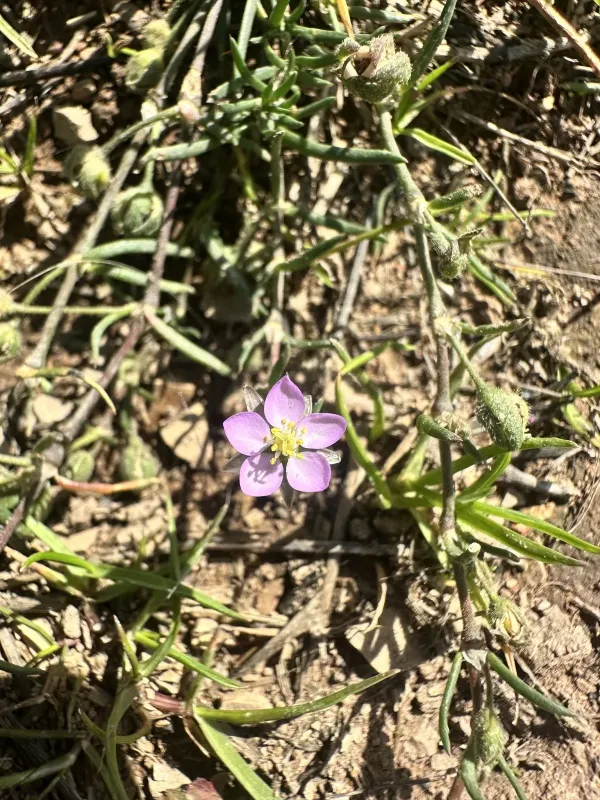
Botanically, it features slender, branched stems and narrow, linear leaves. The delicate pink or purple flowers bloom over a long period, providing a distinctive appearance to its patches, which are often found on roadsides and sandy fields.
It prefers well-drained soils and high-light environments. Its primary ecological value lies in soil stabilization, as its root system helps bind loose particles, preventing wind and water erosion in unstable agricultural environments.
Although often categorized as a weed in traditional farming, its high tolerance for acidity and low nutrient levels makes it an interesting subject for studies on soil remediation and ecological succession management.
Main diseases and pests
Red sandspurry exhibits a high level of natural resilience. It is rarely affected by the major viral or bacterial diseases that typically compromise high-value agricultural crops, thanks to its specialized physiological adaptations.
Fungal issues, such as powdery mildew, may occur during unusually wet or humid summers. These infections generally only affect the foliage's aesthetic appearance without posing a systemic threat to the plant's survival.
Common pests include small sap-sucking insects like aphids, which can occasionally congregate on the flower buds. However, the plant usually recovers quickly, and severe damage is rarely reported in natural populations.
The most effective way to manage the presence of this plant in an agricultural setting is through cultural practices. Raising soil pH via liming is a scientifically proven method to suppress its development.
Mechanical control, such as shallow tilling, is recommended before the plant sets seeds. This prevents the annual replenishment of the seed bank, gradually reducing the population density in future seasons.