
Greater Sea-spurrey
Spergularia media
Description
Growing requirements
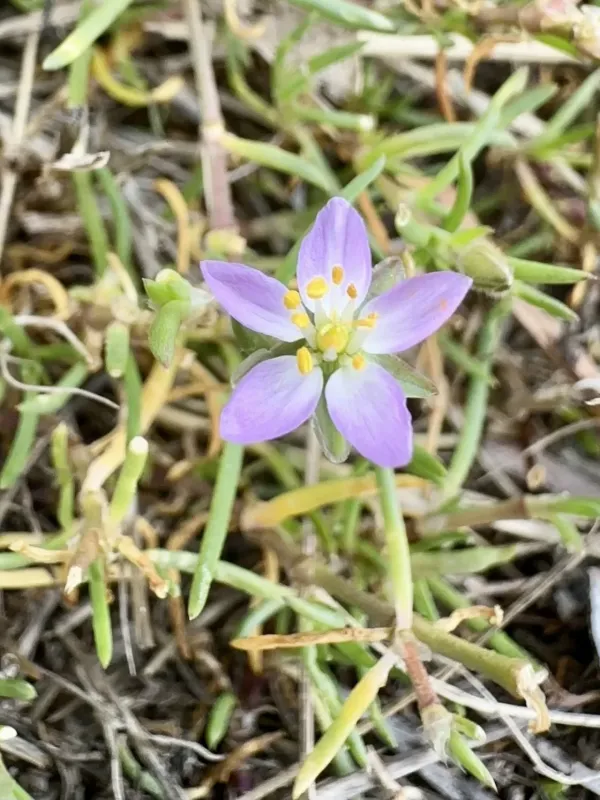
Greater Sea-spurrey (Spergularia media) is a perennial or biennial herb belonging to the Caryophyllaceae family. It is recognized as a significant halophytic species, highly adapted to living in environments with high salinity levels that would be toxic to conventional crops.
Botanically, the plant features fleshy, succulent leaves which are a key adaptation for water retention in saline habitats such as coastal marshes, salt meadows, and inland saline depressions. It exhibits a creeping growth habit, allowing it to cover and stabilize the substrate effectively.
The plant thrives in full sun exposure and well-drained sandy or loamy soils. It requires high light intensity to optimize its photosynthetic processes, and shading is usually detrimental to its development and reproductive success.
Soil requirements involve a high tolerance for sodium chloride. The plant has evolved specialized cellular mechanisms to sequester salt, preventing ion toxicity. This makes it an excellent candidate for the reclamation of saline-degraded farmlands.
Climatically, it is cold-hardy and well-adapted to temperate zones where it can withstand freezing winter conditions. Its phenology is linked to soil moisture availability, making it responsive to early spring conditions for rapid biomass expansion.
Main diseases and pests
The primary threats include fungal diseases triggered by waterlogging with freshwater. Excess moisture can lead to root rot and collar rot, especially in soils that lack adequate drainage, which disrupts the plant's natural saline-dependent balance.
Insect pests, including aphids and specific larvae that feed on succulent halophytes, can cause significant damage during the peak growing season. Regular scouting is essential to identify infestations before they cause severe biomass loss.
Weed competition is the most critical threat during the early seedling stage. Because of its slow initial growth rate, it can easily be outcompeted by invasive weeds if not managed correctly through mechanical or cultural practices.
Nematode infestations in the rhizosphere can impair root function, leading to stunted growth. Maintaining soil health is crucial to minimizing the impact of these soil-borne parasites on the vitality of the crop.
Nutrient toxicity, particularly from improper application of synthetic fertilizers, can disrupt the plant's physiological regulation of ions. It is important to match fertilizer regimes to the plant's specific needs as a halophytic species.