
Spergularia heldreichii
Spergularia heldreichii
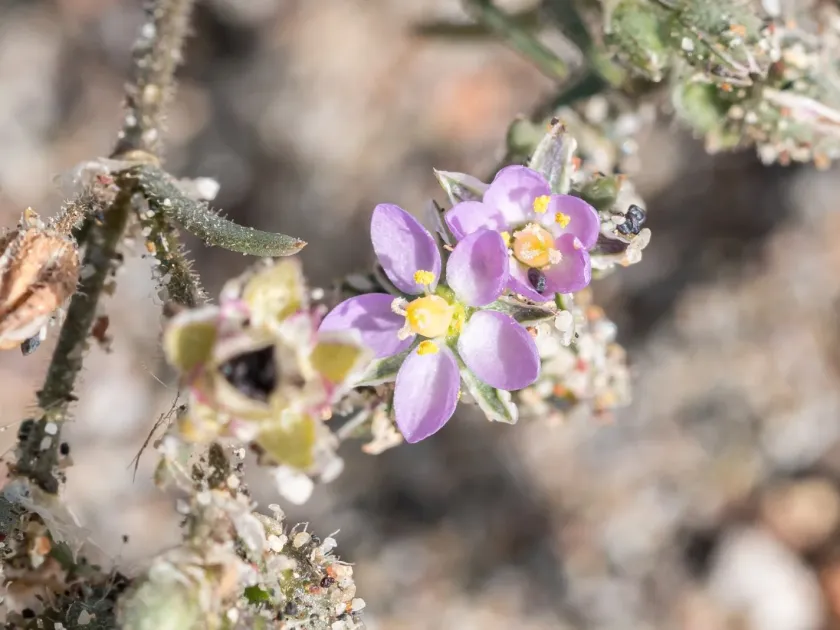
Description
Growing requirements
Spergularia heldreichii, a member of the Caryophyllaceae family, is a specialized halophytic plant species recognized for its ability to thrive in saline environments. It is a focus for researchers interested in the potential of extremophilic plants in sustainable agriculture.
Native primarily to Mediterranean coastal regions, the plant is naturally adapted to substrates characterized by high salinity levels and low nutrient availability. Its distribution is limited to areas where saline influence provides a competitive advantage over non-tolerant flora.
Botanically, it features a herbaceous habit with distinct succulent-like adaptations, allowing it to maintain water balance in harsh, salty conditions. The root system is capable of navigating through sandy or coarse-grained soils common in its native habitat.
Agricultural requirements for this species focus on maintaining its preferred salinity levels to ensure optimal physiological function. Exposure to full sunlight is essential, and the soil must provide excellent drainage to avoid the root rot associated with water stagnation.
The primary agricultural interest in this species involves its use for the revegetation of degraded, salt-affected landscapes. It serves as a biological model for understanding how crops can be integrated into high-salt environments for soil stabilization purposes.
Main diseases and pests
The most significant threat to Spergularia heldreichii is waterlogging, which creates anaerobic soil conditions that lead to rapid decay of the root system in this non-aquatic species.
Specific pathogens that affect Caryophyllaceae members, including various fungal leaf spots and root rots, pose a threat when plants are cultivated at higher densities under greenhouse or field conditions.
Increased pressure from non-specialized opportunistic weed species occurs if soil salinity levels fluctuate, forcing the crop to compete in a less favorable, low-salt environment.
Insect pests such as sap-sucking bugs can damage young, succulent shoots, necessitating a monitoring program to prevent significant loss of photosynthetic leaf area.
Improper agronomic management, specifically the application of standard commercial fertilizers intended for glycophytes, can disrupt the plant's natural mineral balance and weaken its innate resilience.