
Spergularia flaccida
Spergularia flaccida
Description
Growing requirements
Spergularia flaccida is a herbaceous plant belonging to the Caryophyllaceae family. It is recognized for its significant ecological adaptability, specifically its ability to thrive in saline soils where other conventional crops fail to germinate.
The plant originates from arid regions characterized by high mineral content in the soil. Its natural range is concentrated in saline flats and steppe areas, where it functions as a primary vegetation cover.
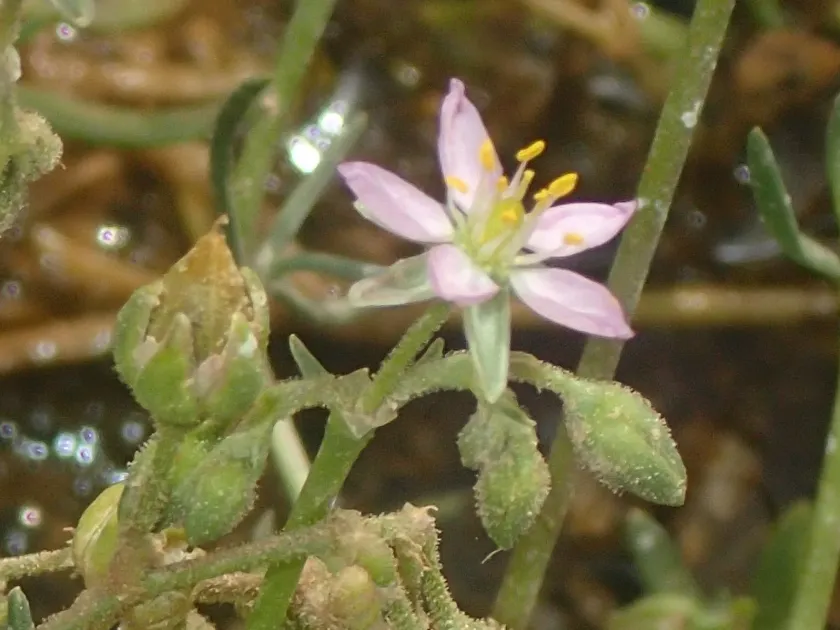
Botanically, the plant features slender, decumbent stems and narrow leaves. This structure is an evolutionary response to water scarcity, allowing the plant to reduce transpiration during peak temperatures.
Soil requirements for Spergularia flaccida are quite unique; it favors alkaline and saline environments. It is often investigated for its potential in land reclamation projects to stabilize saline-affected agricultural zones.
Agricultural management requires minimal intervention. The species does not demand high-input fertilization, making it a sustainable choice for extensive farming systems that aim to utilize marginal lands efficiently.
Main diseases and pests
Root pathogens represent the most significant threat to Spergularia flaccida, particularly in waterlogged soil conditions. Poor drainage is the primary factor leading to fungal rot infections.
Insect pests such as aphids and small lepidopteran larvae may occasionally feed on the foliage. However, their populations are typically suppressed in natural habitats due to the plant's specific chemical composition.
Management practices should focus on maintaining proper soil aeration. Preventing compaction is essential to ensure that the root system remains healthy and resistant to soil-borne pathogens.
Biological control methods are preferred for managing any outbreaks. Integrated Pest Management (IPM) strategies, including the use of healthy, disease-free seeds, provide the best protection against early-stage plant losses.
In cases of heavy infestation, selective weeding and thinning of the crop stand help improve air circulation, significantly reducing the pressure from fungal diseases and preventing their rapid spread.