
Perfoliate Alexanders
Smyrnium perfoliatum
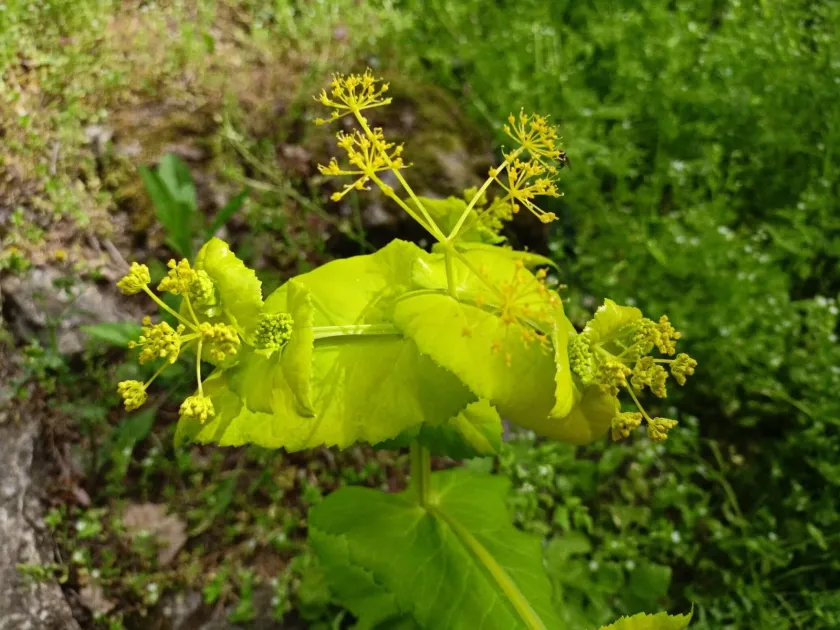
Description
Sowing dates
Perfoliate Alexanders (Smyrnium perfoliatum), a member of the Apiaceae family, is typically sown in autumn or early spring to ensure successful germination through natural stratification.
The seeds are relatively small and require precise placement, usually at a depth of about 1.5 to 2 centimeters, to maintain adequate moisture contact.
Early development is characterized by a slow growth rate, making the seedling stage vulnerable to competition from faster-growing weeds and invasive plant species.
Row spacing should be generous, approximately 45 to 50 centimeters, to accommodate the wide rosette of foliage and facilitate ease of maintenance and harvesting.
Succession planting can be applied in some climatic zones to ensure a steady supply of fresh leaves throughout the growing season for culinary or medicinal use.
Growing requirements
The plant thrives in sites with well-drained, fertile soil rich in organic matter, preferring neutral to slightly alkaline pH levels for optimal growth.
While Perfoliate Alexanders can adapt to partial shade, full sun exposure often promotes more vigorous vegetative development and higher essential oil content in the leaves.
Moisture requirements are consistent; the soil should remain damp but never waterlogged, as excessive standing water can lead to decay of the roots.
The species is known for its hardiness, surviving cold winter temperatures quite effectively, which allows for perennial or biennial cultivation depending on the local climate.
Soil structure should be friable to allow the root system to expand fully, especially when the plant is grown for its edible taproots.
Main diseases and pests
Fungal diseases, including powdery mildew, frequently occur in crowded plantings or areas with poor air circulation, particularly during humid weather.
Root rot represents a significant threat if the soil drainage is inadequate, leading to the rapid decline of individual plants or entire sections of the crop.
Common pests such as aphids and leaf-eating larvae can damage the leaves, while slugs are known to target young seedlings during the initial growth phase.
Effective management strategies rely on good agricultural practices, such as ensuring proper plant spacing and maintaining a strict crop rotation schedule.
Removing plant debris after the growing season helps to reduce the survival rate of pathogens and insect eggs that could affect subsequent crops.
Harvesting
The harvest of young leaves for use in salads or cooking should be timed before the plant enters the bolting phase to ensure maximum flavor and tenderness.
Roots can be harvested in the second year when they have reached maturity, offering a flavor profile similar to other root vegetables in the parsley family.
Careful excavation is necessary during harvesting to maintain the integrity of the root, as broken parts tend to dry out or spoil much faster after harvest.
Post-harvest handling involves cleaning the produce and moving it to a cool environment to prevent premature wilting caused by high transpiration rates.
Storing the product at high humidity and near-freezing temperatures is recommended if immediate consumption or processing is not possible.