
Sloanea monosperma
Sloanea monosperma
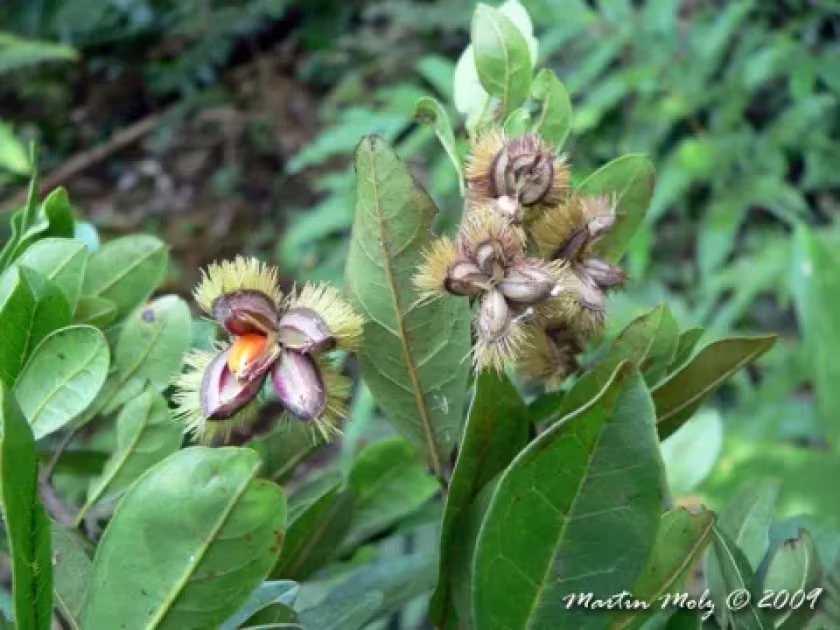
Description
Growing requirements
Sloanea monosperma is a species within the Elaeocarpaceae family, naturally occurring in the tropical rainforests of South America. It is characterized by its evergreen canopy and specific ecological niche requirements.
The plant thrives in equatorial climates where high rainfall and consistent temperatures remain stable year-round, preventing any physiological stress during growth.
Soil preferences involve rich, well-drained substrate, typically found in alluvial forests where organic matter accumulates rapidly and provides essential nutrients.
Cultivation of this species requires shade management, as young seedlings are susceptible to direct high-intensity sunlight and require the protection of larger forest canopy.
Agricultural practices for this tree are limited due to its slow maturation rate, making long-term forest management and sustainable forestry the primary focus for its propagation.
Harvesting
The primary utility of Sloanea monosperma is in the extraction of high-quality timber, which is utilized for specialized woodworking and construction projects.
Harvesting techniques prioritize sustainable forestry, often involving selective logging methods to ensure the preservation of the local forest structure and genetic diversity.
Seed collection is a vital aspect of horticultural management, performed after the fruit capsules open to allow for the effective gathering of viable seeds.
Processing the harvested timber requires careful attention to drying methods to ensure that the wood does not warp or crack after being harvested from the humid tropical environment.
Standard quality control involves checking for defects in the timber to ensure it meets the requirements of the local and regional artisanal markets.