
Sloanea dentata
Sloanea dentata
Description
Growing requirements
Sloanea dentata is a prominent tropical tree species belonging to the Elaeocarpaceae family. This evergreen tree is native to the tropical forests of Central and South America and the Caribbean, thriving in environments characterized by high temperatures and significant annual rainfall.
The culture requires deep, nutrient-rich soils that maintain high moisture content throughout the year. It typically prefers tropical lowland forest conditions, where the canopy provides the necessary shelter for young seedlings, although the tree grows to reach the upper canopy as it matures.
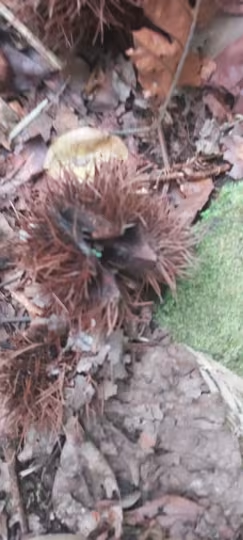
Botanically, Sloanea dentata is distinguished by its large leaves with serrated margins, which serve as a primary identification marker. The flowers are generally inconspicuous, but the tree is well-known for its woody, spiny capsules that contain seeds, providing a defense mechanism against seed predators.
From an agricultural and forestry perspective, the species is valued for its hard and durable timber. While it is not traditionally mass-farmed like plantation crops, it is a significant forest resource used in local construction, high-quality furniture making, and architectural woodwork due to its structural integrity.
The management of this species involves sustainable logging practices to ensure the preservation of its habitat. As a member of the forest ecosystem, it plays a vital role in local biodiversity. Future prospects for the species include potential integration into agroforestry systems aimed at restoring degraded tropical lands.