
Sinningia macrostachya
Sinningia macrostachya
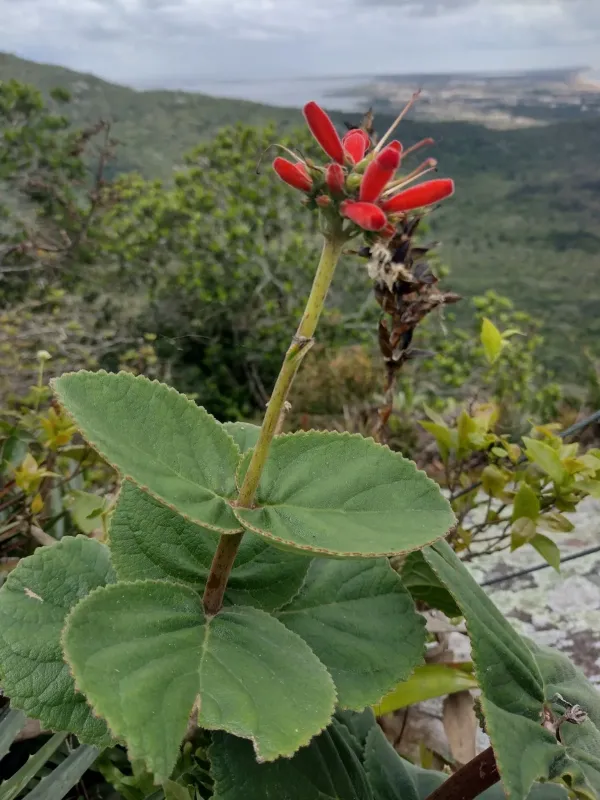
Description
Growing requirements
Sinningia macrostachya is a prominent member of the Gesneriaceae family, naturally occurring in the tropical rainforests of Brazil. This herbaceous perennial is highly regarded for its unique biological adaptation, specifically the development of a large tuber which stores water and nutrients for the plant.
The morphology of the plant is characterized by thick, erect stems and pubescent leaves. This leaf structure serves as a defense mechanism against intense light and contributes to the plant's ability to maintain moisture in its native humid forest environment.
Successful cultivation requires a well-draining, lightweight potting mix. A substrate consisting of high-quality peat, perlite, and decomposed organic matter is essential to prevent root asphyxiation, which can occur rapidly in dense or waterlogged soils.
Climate requirements focus on maintaining a warm, stable environment with temperatures between 20°C and 25°C. The plant exhibits low tolerance for cold drafts or drastic temperature fluctuations, which can trigger dormancy or lead to physical damage of the foliage.
Regarding light, Sinningia macrostachya thrives under bright but indirect illumination. Exposure to direct sunlight is typically detrimental, often leading to scorched leaves or inhibited growth, making shaded or filtered light conditions the standard requirement for greenhouse or indoor setups.
Main diseases and pests
The primary horticultural threats to this species involve pathogen-induced root rot caused by poor soil drainage and excessive irrigation. If the tuber remains in saturated soil for extended periods, it becomes highly susceptible to fungal decay, necessitating strict water management protocols.
Pest management is equally critical, as plants are prone to infestations by spider mites and mealybugs. These pests thrive in dry environments, making it vital to monitor leaf undersides closely and employ systemic insecticides or horticultural oils when early signs of activity are detected.