
Sinningia cardinalis
Sinningia cardinalis
Description
Growing requirements
Sinningia cardinalis is a tuberous perennial plant belonging to the Gesneriaceae family. Native to the rocky slopes and tropical forests of Brazil, this species has adapted to thriving in porous, well-draining soils rich in organic matter. Its biological cycle is defined by an active growth phase and a dormancy period where the foliage dies back.
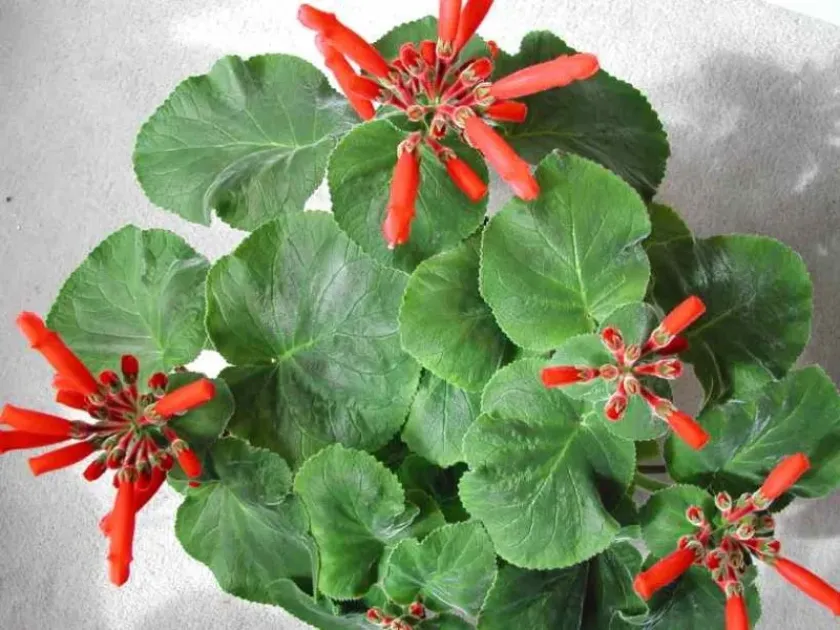
Botanically, the plant is characterized by its fuzzy, velvety leaves and striking, helmet-shaped scarlet flowers. These flowers are evolutionary adapted to attract specific pollinators, making the plant a fascinating subject for both botanists and indoor plant enthusiasts who appreciate unique floral structures.
Regarding climate requirements, the plant prefers bright, indirect light conditions. Direct sunlight is generally harmful as it can scorch the delicate, pubescent leaves. The temperature should be consistently warm, ideally ranging between 20°C and 25°C, while protection from cold drafts and sudden temperature fluctuations is essential.
The cultivation substrate must ensure perfect drainage to protect the tuber, which is highly susceptible to rot. A mixture comprising peat moss, perlite, and leaf mold is recommended to maintain the right balance of moisture retention and aeration, supporting healthy root development throughout the growing season.
In terms of economic use, Sinningia cardinalis is primarily utilized in the ornamental horticulture sector. It serves as a prized specimen for indoor plant collections and botanical conservatories. Its ability to regrow from a tuber allows for seasonal management, which is a significant advantage for commercial growers.
Main diseases and pests
Fungal diseases are the primary threat to Sinningia cardinalis, particularly those resulting from waterlogged soil. Root and tuber rot can destroy the plant rapidly if irrigation schedules are not strictly monitored, making proper soil moisture management the cornerstone of successful agricultural practice.
Spider mites are the most common pests, especially in environments with low humidity. These microscopic insects feed on the undersides of the leaves, leading to chlorosis and potential plant death if left untreated. Regular misting and the use of insecticidal soaps are effective control measures.
Thrips may also target the plant, causing scarring on the flowers and leaves. Detecting these pests early is crucial for maintaining the ornamental quality of the crop. Implementing physical barriers and using systemic insecticides can help manage population levels in greenhouse settings effectively.
Powdery mildew represents another typical health issue, manifesting as a white, dusty layer on the foliage. To prevent this, growers must ensure adequate air circulation and avoid wetting the leaves during watering. Fungicides are appropriate for controlling active outbreaks, provided the ventilation is improved simultaneously.
Mealybugs are known to infest the leaf axils, hiding from routine inspections. Manual removal using cotton swabs dipped in alcohol followed by careful monitoring is essential for eradicating these pests. Strict adherence to sanitation and quarantine protocols for new plants significantly reduces the risk of overall crop failure.