
Sindora supa
Sindora supa
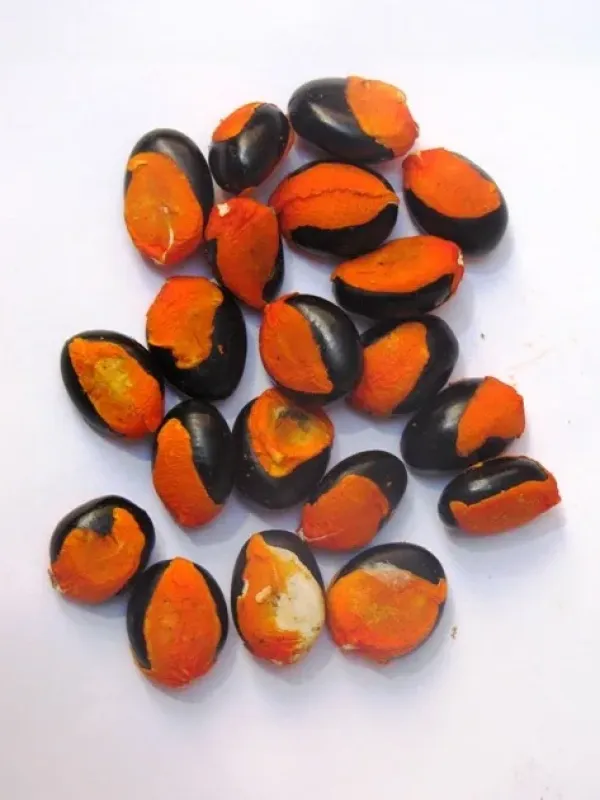
Description
Sowing dates
Sindora supa is a slow-growing tree species, meaning that regeneration cycles are inherently long. The seeds possess a hard seed coat, which necessitates mechanical or chemical scarification to achieve consistent germination rates in nursery conditions.
Sowing in containers is typically performed at the onset of the rainy season to ensure ample moisture for seedling establishment. Seeds should be planted at a shallow depth of two to three centimeters in a well-draining, nutrient-rich potting medium.
Seedlings are ready for transplanting to their permanent forest sites once they reach a height of 30 to 40 centimeters. Care must be taken to maintain root ball integrity, as the species exhibits sensitivity to root disturbance during the transfer process.
Standard spacing in reforestation projects is often set at three by three meters, allowing for proper canopy development. This systematic arrangement encourages vertical growth and the development of a straight, high-quality trunk.
Post-planting maintenance involves weeding the area around each sapling for at least three years. This reduces competition for sunlight and nutrients, which is vital for the survival of this slow-maturing species.
Growing requirements
Sindora supa is a member of the Fabaceae (legume) family and is endemic to the Philippines. It thrives in tropical rainforest environments, specifically in lowland areas that provide consistent, reliable moisture.
The tree prefers deep, fertile, and well-draining loamy soils. It is intolerant of waterlogged conditions, which can lead to rapid root decay and mortality, especially in the early stages of development.
A stable tropical climate with temperatures between 24 and 30 degrees Celsius is ideal for sustained growth. The species requires high levels of atmospheric humidity and is susceptible to drought stress.
Light availability is crucial, as the tree exhibits varying needs throughout its lifecycle. While seedlings benefit from partial shade, mature trees require full sunlight to support their biomass accumulation.
Protection from strong, desiccating winds is essential for young plantations. Planting in sheltered valleys or within mixed-species forest systems helps mimic the natural protective environment of the species.
Yield
The primary economic output of Sindora supa is its dense, durable, and aesthetically pleasing timber. Known for its rich color and grain, it is highly valued in the luxury furniture and cabinetry industries.
The wood is naturally resistant to fungal decay and insect attacks, making it a sustainable choice for high-end interior finishes. This durability reduces the need for chemical treatments, enhancing its market appeal.
Beyond timber, the seeds have been historically utilized for their oil content in various local applications. However, this remains a niche utility compared to the long-term value of the harvested wood.
Yield management requires a long-term perspective due to the species' slow growth rate. Strategic forest management ensures that selective harvesting can be balanced with ongoing ecological preservation.
Investing in Sindora supa plantations is a long-term venture. Given the increasing scarcity of high-quality tropical hardwoods, the value of mature stands continues to grow in the global market.
Main diseases and pests
The most significant threat to Sindora supa is habitat destruction driven by uncontrolled deforestation and land-use changes. Consequently, the species is recognized as vulnerable, requiring active conservation efforts.
Root pathogens, often triggered by excessive soil moisture and poor drainage, represent a major health risk to saplings in plantation settings. Proper site selection and water management are the primary defenses.
Stem-boring insects can pose a threat to both young and mature trees by weakening structural integrity. Regular field inspections and prompt removal of infested material are necessary to manage potential outbreaks.
Physical damage from wildlife, including wild boars and rodents, is a common issue for young saplings. Protective physical barriers are standard practice to safeguard new plantations during the vulnerable early years.
Competition from aggressive invasive weeds and vines can quickly suppress saplings if left unmanaged. Regular cultural maintenance, such as manual clearing, is essential to ensure the tree reaches the canopy layer.