
Sindora coriacea
Sindora coriacea
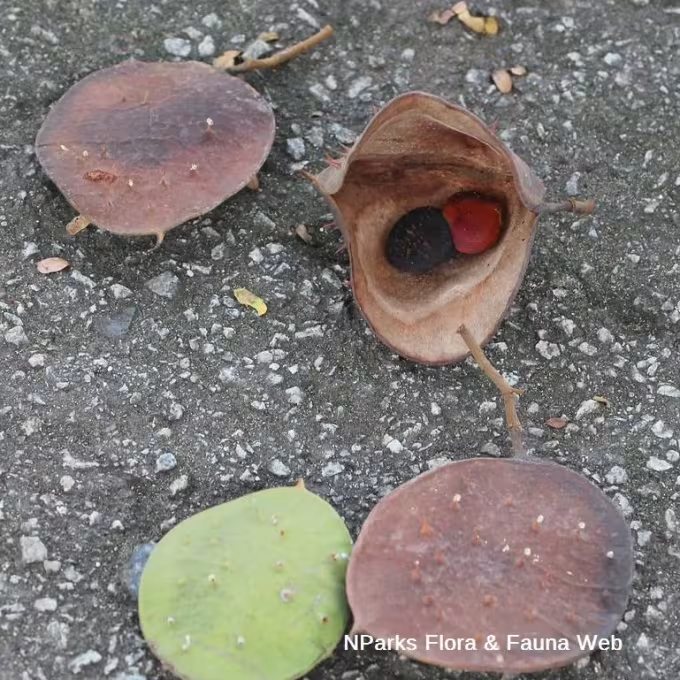
Description
Growing requirements
Sindora coriacea is a prominent member of the Fabaceae (legume) family, native to the tropical rainforests of Southeast Asia. This species is characterized by its large stature and specific adaptation to the humid tropical environment where rainfall is abundant throughout the year.
The plant thrives in deep, well-draining soils that are typically rich in organic matter. Agricultural success for this species depends heavily on avoiding waterlogged sites, as the root system is highly sensitive to soil hypoxia, which can lead to rapid decay.
Optimal climatic conditions include high and stable temperatures, ideally within the tropical range. Sindora coriacea requires a microclimate that maintains high humidity, which is often facilitated by natural forest shade during the seedling stages of growth.
Soil management in cultivation involves maintaining a natural leaf litter layer, which mimics the forest floor. This practice not only provides necessary nutrients but also helps in stabilizing soil temperature, promoting healthy growth of the tree.
Space management is crucial because the species develops an extensive and spreading canopy. Proper spacing in plantation schemes is essential to ensure adequate airflow and sunlight, which are vital for maintaining the vigor of the trees and preventing overcrowding.
Yield
The primary economic output of Sindora coriacea is its high-quality timber, which is highly valued for its durability, hardness, and decorative grain. It is a preferred material for premium furniture making and high-end joinery projects.
Beyond its timber value, the tree plays an important role in agroforestry systems by providing shade and structural support to smaller plants. Its ability to thrive in varied tropical landscapes makes it a candidate for sustainable land management.
Research into the secondary metabolites found in various parts of the tree, including the seeds and bark, indicates potential applications in pharmaceutical or technical fields, though these uses remain under investigation for commercial viability.
The wood's natural resistance to certain types of environmental degradation makes it a sustainable choice for long-term construction projects. However, the slow growth rate requires a long-term management strategy for effective resource planning.
Harvesting strategies are based on selective logging to maintain ecosystem balance. This ensures that the population of Sindora coriacea remains viable, providing a sustainable supply of timber while protecting the underlying biodiversity of the forest.
Main diseases and pests
Common threats to Sindora coriacea include wood-boring insects that can damage the internal structure of the tree, significantly reducing its timber value. Regular forestry inspections are necessary to detect and mitigate these infestations early.
Fungal infections are a significant risk, particularly in areas with poor ventilation and high moisture levels. Such conditions favor the growth of pathogens that attack roots and stems, often leading to the decline of younger trees.
- Implementation of selective thinning to improve ventilation.
- Sanitary logging to remove heavily infected or dying specimens.
- Use of native biocontrol agents to manage insect populations in plantations.
Climate change poses a long-term risk, as altered precipitation patterns can disrupt the tree's development and weaken its natural defenses. Enhancing the resilience of plantations involves selecting site-appropriate varieties that can withstand minor climatic fluctuations.
Human-induced environmental degradation remains the largest threat to native populations. Modern agroforestry approaches focus on preserving existing habitats while establishing dedicated, scientifically managed plantations to alleviate pressure on wild stocks.