
Sharp-pointed rush
Juncus acutus L.
Description
Growing requirements
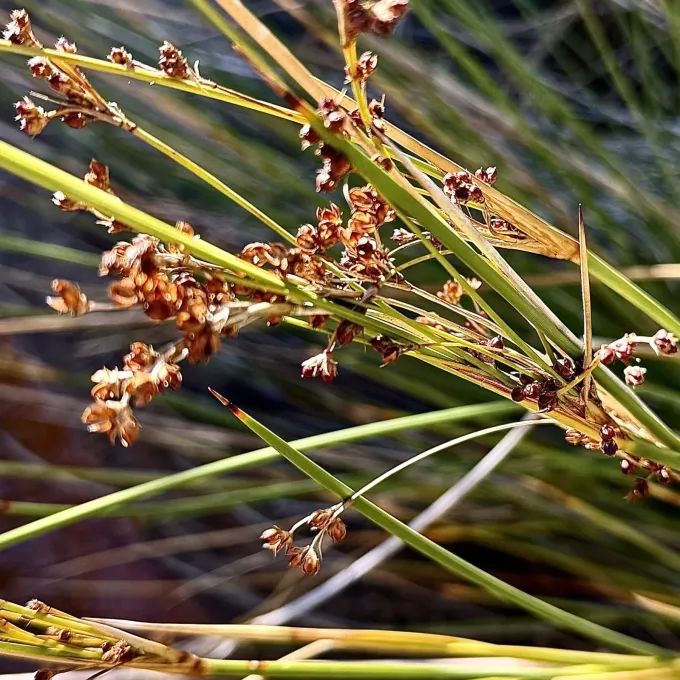
The sharp-pointed rush (Juncus acutus L.) belongs to the Juncaceae family. It is a robust, perennial plant forming large, dense clumps, characterized by stiff, sharp-tipped cylindrical stems that can reach heights of up to 2 meters.
This species is native to diverse coastal regions across the globe, frequently found in saline marshes, sandy shores, and humid meadows. It is highly adapted to varying levels of salinity and fluctuating water tables.
The plant thrives in full sun and demands high moisture levels in the soil to flourish. It demonstrates exceptional resilience against environmental stresses, including salty winds and temporary submergence in water.
Cultivation practices involve providing adequate space for root expansion, as the plant develops a complex, deep-seated root system. It prefers moist, sandy, or silty soils but is versatile enough to handle slightly degraded landscapes.
For propagation, both seed germination and division of clumps are effective. Seeds require a period of cold treatment to ensure optimal germination rates, followed by a consistent moisture regime during the seedling stage.
Yield
The utility of Juncus acutus is primarily focused on ecological restoration and sustainable land management rather than traditional agricultural yields. It provides essential ecosystem services by stabilizing shorelines.
In landscape design, its aesthetic appeal and rigid structure make it an excellent choice for modern architectural gardens and water-feature margins where a dramatic, sculptural element is required.
The material yield includes the stems, which are harvested for weaving, creating decorative mats, and as a natural material for traditional crafts. The stems' durability is their primary economic asset.
Phytoremediation yield is significant; the plant acts as a biological filter, efficiently absorbing heavy metals and excess salts from the soil and water, contributing to the purification of contaminated wetlands.
The plant generates significant biomass annually, which can be utilized for organic composting or as a base material in bio-based manufacturing industries, though industrial-scale processing remains a niche area.
Main diseases and pests
The sharp-pointed rush is remarkably resistant to typical plant pathogens. Because of its tough, silica-rich cell walls, it is seldom susceptible to major agricultural diseases or fungal infections.
The primary concern during the initial planting phase is the presence of aggressive invasive weeds. Early competition management is crucial to allow the rush to establish its dense, protective clump structure.
While few pests affect the plant, larvae or mites may occasionally impact the growing tips in poorly ventilated greenhouse conditions. In natural outdoor habitats, the plant is largely self-sustaining and pest-free.
Over-saturation with industrial pollutants exceeding the plant's natural filtering capacity may lead to physiological stress. Periodic monitoring of water quality is recommended in projects focused on environmental cleanup.
To ensure long-term vitality, growers should avoid excessive fertilization. Excess nitrogen can weaken the plant's structural integrity and potentially make it more susceptible to opportunistic rot in waterlogged soils.