
Jointed rush
Juncus articulatus L.
Description
Growing requirements
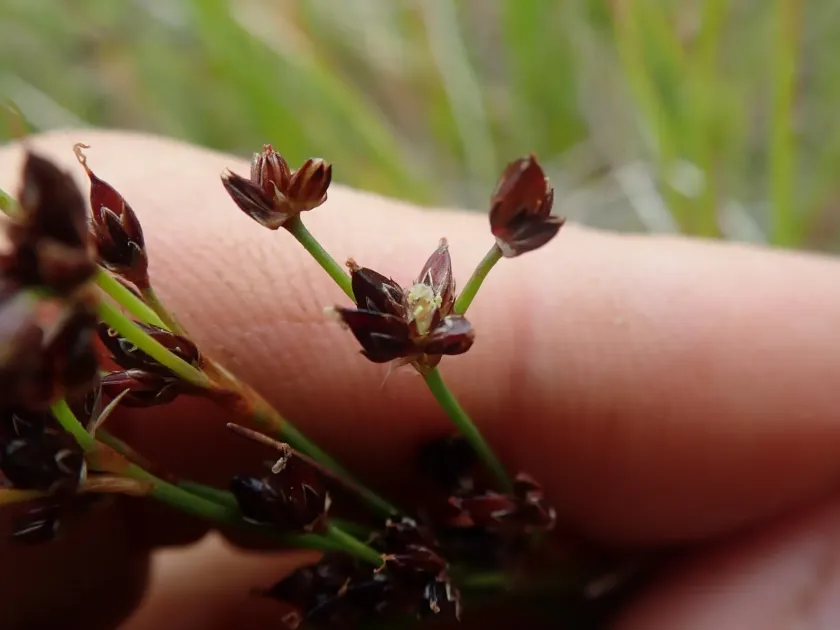
Jointed rush (Juncus articulatus L.) belongs to the Juncaceae family. It is a perennial herbaceous plant recognized by its hollow, cross-partitioned stems and leaves, which are typical for this species and allow for easy identification in the field.
This species is a typical hydrophyte, naturally occurring in wetlands, marshes, and along the banks of water bodies. It thrives in locations with high water tables where soil remains saturated for most of the growing season.
Regarding soil requirements, Juncus articulatus prefers acidic to neutral soils rich in organic matter. It is highly adaptable to various soil types, ranging from silty clay to peat, provided that the moisture level is consistently high.
The climate requirements for this plant include cool to temperate conditions. It is well-adapted to the variable temperatures of the northern hemisphere, showing significant winter hardiness and the ability to resume growth early in the spring.
Agrotechnically, it is rarely planted as an agricultural crop but is managed in natural grasslands. Maintaining an appropriate hydrological regime is the primary factor for ensuring the presence and vitality of this plant.
Yield
The agricultural value of Jointed rush is considered low. Due to its rigid stem structure and high content of silica, it is not highly palatable for livestock and has relatively low protein content compared to forage grasses.
However, in extensive pasture systems, it serves as an additional source of biomass for grazing animals during the early spring when the plants are still tender and succulent before the stems become lignified.
Biomass productivity is variable, usually yielding about 1.5 to 3.0 tons of dry matter per hectare in optimal wetland conditions. It is rarely harvested for hay because it hinders the drying process of more valuable forage species.
Its primary agricultural use is focused on soil stabilization. The dense root system of Jointed rush is highly effective at preventing erosion along irrigation ditches, streams, and low-lying agricultural areas prone to flooding.
Beyond soil protection, it is increasingly used in phytoremediation projects. The plant helps absorb excess nitrates and phosphates from agricultural runoff, contributing to the improvement of water quality in local watersheds.
Main diseases and pests
Jointed rush displays remarkable resistance to common crop diseases. The robust mechanical structure of the plant prevents many fungal pathogens from penetrating the epidermis, ensuring healthy growth even in humid environments.
Insect pests that typically plague cereal crops show little interest in Juncus articulatus. The presence of abrasive silica compounds in its leaves and stems makes the plant difficult for many insects to consume.
The main threat to the dominance of Jointed rush is the encroachment of more aggressive wetland species. Changes in water management that lead to a decrease in soil moisture levels can lead to a rapid decline in its population.
Control of this species in fields is strictly linked to water management. Installing effective drainage systems is the most reliable way to decrease the suitability of an area for Jointed rush colonization.
There are no standardized chemical pest management protocols for this plant, as it is generally treated as a natural component of the environment rather than a target for agricultural pesticide application.