
Hard rush
Juncus inflexus L.
Description
Growing requirements
Hard rush (Juncus inflexus L.) is a perennial herbaceous plant belonging to the Juncaceae family. It is recognized for its tough, blue-green stems and dense, tufted growth habit that thrives in waterlogged conditions.
The plant is native to Eurasia and North Africa. It typically inhabits moist meadows, damp pastures, and the margins of ponds or rivers. It shows a strong preference for heavy, clay-rich soils that maintain high moisture content throughout the growing season.
To succeed, Juncus inflexus requires full sun exposure to maintain its characteristic stem color and structural integrity. While it can tolerate a wide pH range, it is strictly intolerant of drought and requires consistent water availability to thrive.
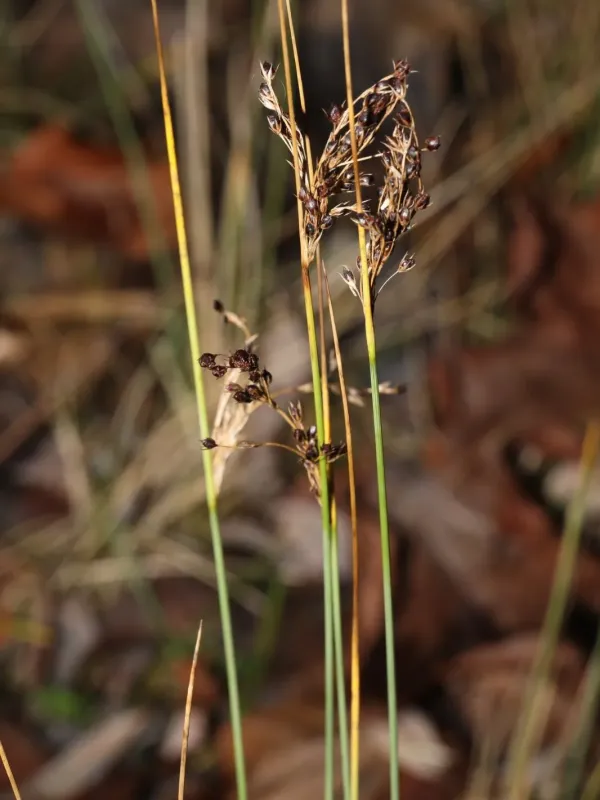
Botanically, the species is distinguished by its stems, which feature a continuous, pithy interior and horizontal rhizomes. The leaves are mostly reduced to dark, papery sheaths at the base of the stems, leaving the stems to conduct most of the photosynthesis.
The economic value of this plant is primarily linked to its role in bio-remediation and as a structural element in aquatic landscaping. It is highly effective at stabilizing embankments and filtering pollutants from runoff water in constructed wetlands.
Main diseases and pests
Hard rush is a remarkably resilient plant that displays significant resistance to most agricultural pests and common plant pathogens. Its tough, silica-rich tissue makes it unpalatable to most herbivores, protecting it from significant damage.
Disease incidence is typically low, though rust fungi may occasionally infect the stems under conditions of extreme humidity or poor airflow. These infections are rarely fatal and do not pose a significant risk to established colonies.
The primary threat to Juncus inflexus is human-induced habitat alteration, particularly land drainage and the acidification of riparian zones. As a wetland-dependent species, it cannot survive in regions where water tables are permanently lowered.
Invasive weed management programs generally consider hard rush a competitor rather than a victim. It can be difficult to eradicate once established due to its deep and resilient root system, which readily resprouts after shallow cutting.
There are no standardized pest control measures for this species, as it is generally treated as a beneficial component of its ecosystem. In agricultural settings, mechanical removal via deep tillage remains the only reliable method for clearing the land.