
Scurrula ferruginea
Scurrula ferruginea
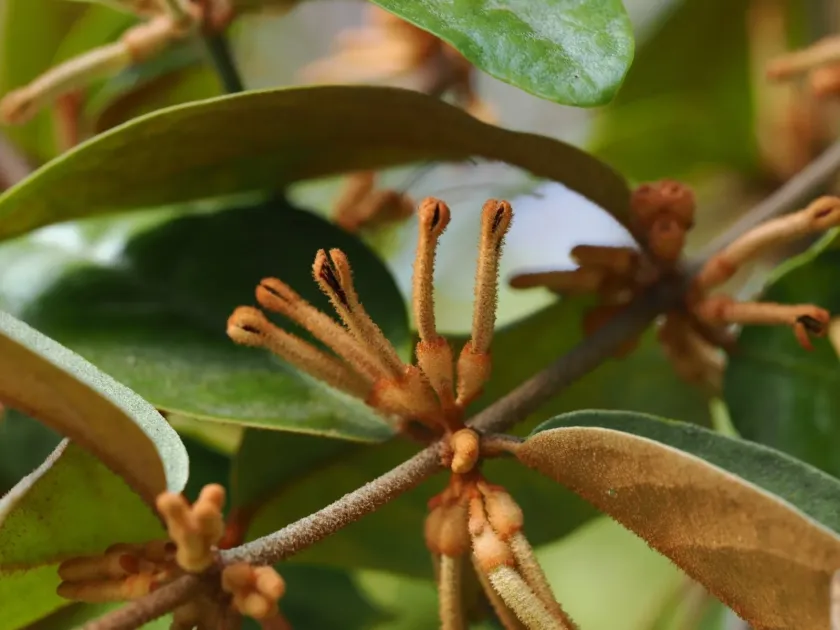
Description
Growing requirements
Scurrula ferruginea is a notable member of the Loranthaceae family, characterized by its hemiparasitic nature. It functions as an epiphyte, attaching itself to the branches of various host trees to extract water and essential minerals via specialized structures called haustoria.
The plant is indigenous to the tropical regions of Southeast Asia, including countries like Indonesia, Malaysia, and Thailand. It thrives in high-humidity environments where the climate remains consistently warm, allowing it to germinate and establish its connection to the host efficiently.
Unlike conventional crops, Scurrula ferruginea does not have soil requirements as it relies entirely on the host tree. Its growth is supported by high ambient moisture levels, which are critical for the initial stage of seedling development when it first encounters a suitable branch.
The morphological features of Scurrula ferruginea include a woody stem and leaves that often show a distinct rust-colored pubescence, which gives the plant its specific name. The reproductive strategy involves producing berries that attract birds, which act as primary dispersal agents.
From an agricultural standpoint, it is primarily viewed as a pest. Its impact on host trees can be significant, as it competes for resources, leading to reduced vigour and potential branch dieback in affected fruit or plantation trees, necessitating regular management.
Main diseases and pests
The primary threat to the survival of Scurrula ferruginea is the active mechanical removal by farmers to protect high-value crops. As it is highly specialized, it cannot survive if the host tree is pruned back or if the branch it inhabits is removed from the host.
In terms of ecological threats, the plant is susceptible to various pathogens that might affect the host tree, as the parasite's health is intrinsically linked to the physiological state of the host. There are no known large-scale industrial biological controls specifically designed for this species.