
Scurrula cordifolia
Scurrula cordifolia
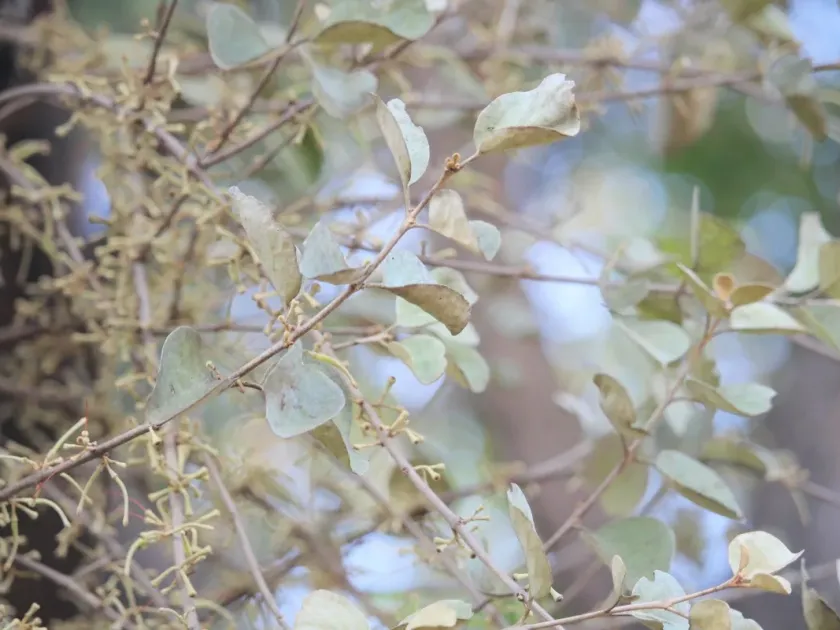
Description
Growing requirements
Scurrula cordifolia is a perennial hemiparasitic shrub belonging to the Loranthaceae family. This species typically lives as an epiphyte, attaching itself to the branches of host trees to access essential resources for survival.
The native distribution of this plant includes the tropical and subtropical regions of Asia, specifically mountain ranges and dense forests. It thrives in high-humidity environments where the climate remains consistently warm throughout the year.
Its primary botanical adaptation is the haustorium, a specialized organ that penetrates the host's bark and xylem. Through this structure, Scurrula extracts water and dissolved minerals from the tree it parasitizes while performing photosynthesis.
The leaves of the plant are distinctively cordate, or heart-shaped, which serves as a key identifying characteristic. The growth habit involves dense branching, often creating large clusters that can weigh down the host tree's branches over time.
This plant does not have specific soil requirements since it does not root in the ground. Instead, its growth is limited by the health of the host tree and the availability of suitable branches for colonization and nutrient extraction.
Main diseases and pests
A major threat to Scurrula cordifolia is the decline of the host tree. If the host becomes overly stressed or dies due to infestation, the parasite loses its source of water and mineral uptake, leading to its eventual demise.
The plant is susceptible to various fungal pathogens that thrive in tropical climates, which can cause rotting of the stems or localized leaf damage, affecting the overall physiological capacity of the shrub.
Insects, particularly specialized caterpillars and beetles, often feed on the foliage of Scurrula, which can reduce its photosynthetic area and make it more vulnerable to secondary environmental stresses.
Competition for limited space on the host tree is another significant pressure, as other epiphytic or parasitic species may attempt to colonize the same conductive tissues, leading to a struggle for resources.
Agricultural management often involves the removal of this species from orchards and plantations, as it is considered an unwanted parasite that negatively impacts the vitality and fruit yield of the host tree.