
Scurrula elata
Scurrula elata
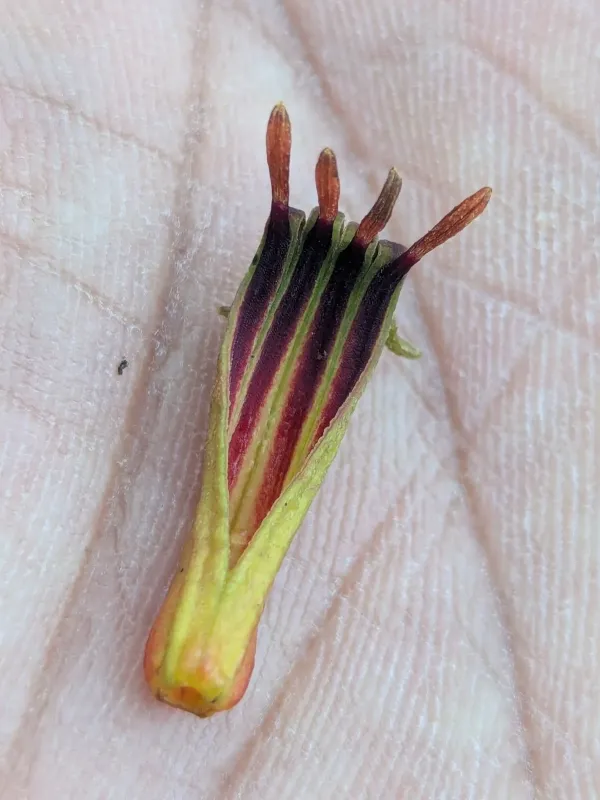
Description
Growing requirements
Scurrula elata is a perennial semi-parasitic plant belonging to the Loranthaceae family. Unlike conventional crops, it is an epiphyte that relies on host trees to survive, attaching itself to branches using specialized structures.
The plant possesses the ability to photosynthesize, yet it obtains water and essential minerals from the host tree through haustoria—modified roots that penetrate the host's xylem. This dual strategy allows it to thrive in varied forest environments.
The native range of the species covers various mountainous and tropical regions of Asia, including the Himalayas and subtropical parts of China. It is highly adapted to humid environments where atmospheric moisture facilitates its establishment.
The success of this plant is closely linked to the health of the host species. It does not require soil cultivation, instead, it depends on the host's ability to maintain a continuous upward flow of sap, which the parasite exploits for its own development.
Environmental conditions must include consistent warmth and high humidity levels. The plant is typically found in the canopy layers of forests, demonstrating a high tolerance for varying light intensities depending on its specific position in the tree structure.
Main diseases and pests
The primary concern regarding this species is its negative impact on agriculture and forestry. It acts as a significant parasite, causing growth reduction, branch dieback, and in severe cases, the death of the host tree due to intense resource competition.