
Scurrula atropurpurea
Scurrula atropurpurea
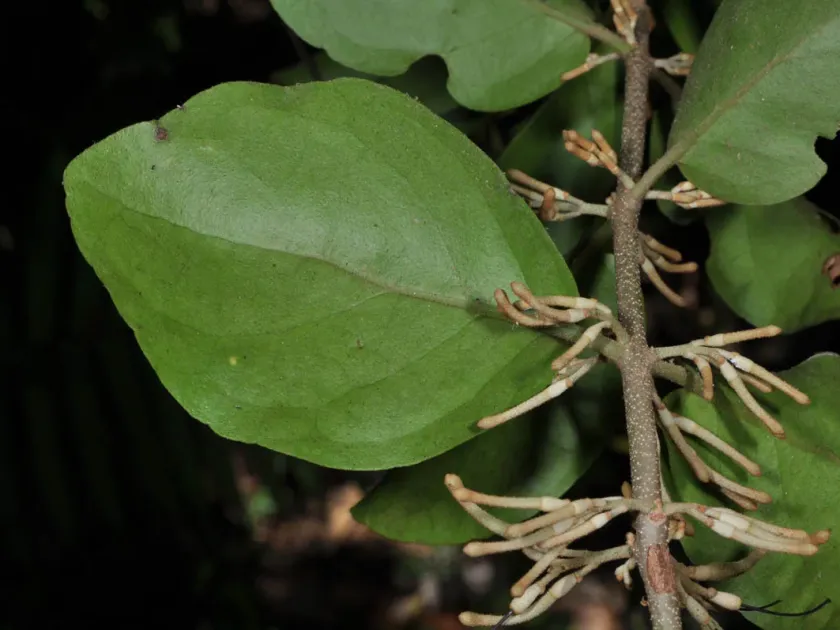
Description
Growing requirements
Scurrula atropurpurea is a distinct species belonging to the Loranthaceae family. It is a hemi-parasitic plant that thrives as an epiphyte, attaching itself to the branches of various trees and shrubs within its native tropical habitat.
The plant is naturally found across the tropical regions of Southeast Asia, including countries like Indonesia and Malaysia. It is well-adapted to high-humidity environments, where it selects host trees to extract water and mineral nutrients through its specialized roots.
Botanically, it is defined by the development of haustoria. These are specialized structures that penetrate the host plant's xylem, allowing the parasite to drain essential resources while remaining capable of photosynthesis through its green, succulent leaves.
Environmental requirements include a consistent tropical climate with high ambient moisture and stable, warm temperatures throughout the year. The plant relies on adequate sunlight and specific host availability to complete its complex life cycle.
Economically and culturally, this plant is not an industrial crop but holds value in traditional medicine. Various local communities have utilized its extracts for their purported anti-inflammatory properties and other medicinal applications.
Main diseases and pests
In managed agricultural environments, Scurrula atropurpurea is often treated as a harmful weed. Because it competes with host trees for resources, its presence can significantly decrease the vitality and yield of fruit-bearing and ornamental trees.
Common biological threats include various fungal pathogens that can cause leaf spots and branch decay, especially during shifts in the monsoon season. These diseases can effectively terminate the parasite's life cycle if the host tree remains healthy.
Insect pests represent a major factor affecting the health of the population. Larvae of specific butterfly species feed on the foliage, while wood-boring insects may damage the haustorial connection, cutting off the parasite from its nutrient source.
Management techniques for controlling this species primarily involve physical removal. Gardeners and foresters are advised to prune branches infested with the parasite, ensuring the site of attachment is fully removed to prevent regeneration.
The species faces threats from habitat loss and deforestation. As a plant dependent on host trees, any reduction in the diversity and health of the surrounding forest ecosystem directly negatively impacts the long-term survival of the species.