
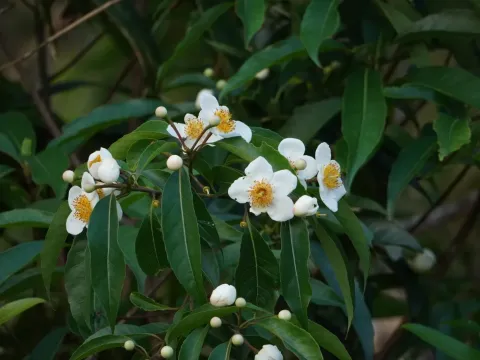
Schima
Schima
Schima is a genus of evergreen trees belonging to the Theaceae family. These trees are characterized by their tall, straight trunks and dense canopy, making them significant components of their native forest ecosystems.
What the section contains


Schima
Originating in Southeast and East Asia, Schima species are well-adapted to subtropical and tropical environments. They thrive in regions with consistent rainfall and high humidity, which are essential for their rapid growth and health.
Successful cultivation requires deep, well-drained acidic soils. The plants are highly sensitive to soil compaction and waterlogging, meaning that proper site selection and drainage preparation are fundamental to agricultural success.
The agronomic management of Schima involves monitoring light levels. While they display a degree of shade tolerance during their early stages, mature specimens require significant sunlight to maintain their structural integrity and optimal timber growth rates.
Commercially, Schima is valued for its high-density timber, which is utilized in construction and furniture making. Additionally, its aesthetic properties make it a favored species for ecological restoration and ornamental landscaping in suitable climates.
The primary threats to Schima trees include fungal diseases such as root rot, which are often exacerbated by poor drainage and excessive soil moisture. These pathogens can cause significant damage to the root system and overall stability of the tree.
Pests, particularly various species of defoliating insects and scale insects, can impact young plantations. Regular scouting and biological controls are often used to mitigate these issues and prevent severe infestations.
Sanitation practices, including the removal of deadwood and infected branches, are critical in maintaining a healthy orchard or forest stand. Ensuring proper spacing between trees further helps in maintaining airflow and reducing humidity-related diseases.
Maintaining balanced soil fertility through targeted fertilization is essential for tree vigor. A healthy, well-nourished tree is naturally more resistant to both biotic and abiotic stress factors present in the environment.
Professional forestry management involves regular monitoring and quick intervention upon the appearance of any unusual symptoms on the leaves or bark to ensure long-term viability of the Schima population.