
Winter savory
Satureja montana L.
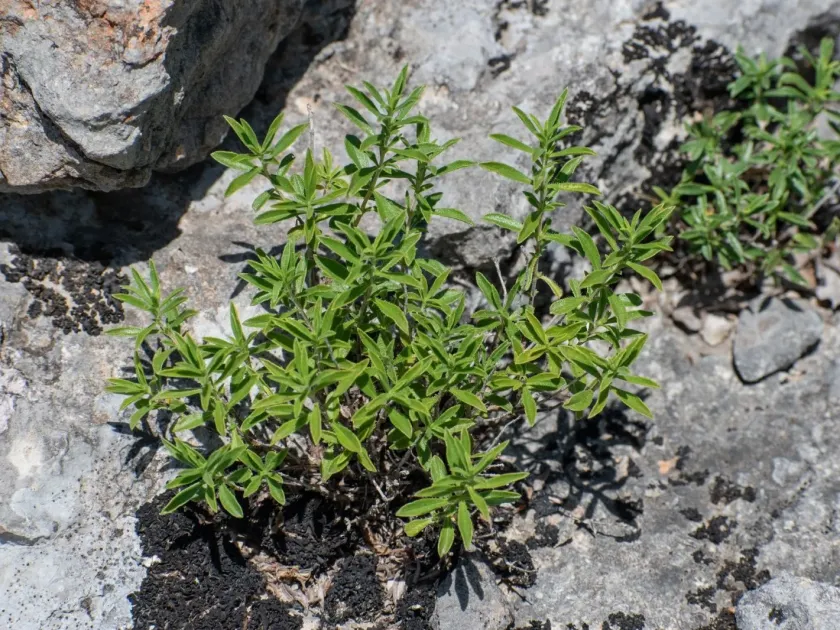
Description
Sowing dates
Winter savory is typically propagated via seeds, which can be sown indoors in late winter or directly into the garden once the danger of frost has passed.
Seeds are very small and should be sown on the surface of the soil, pressed lightly, and barely covered with a thin layer of fine soil or vermiculite.
Germination usually takes about two to three weeks, provided that the soil is kept consistently moist and warm, ideally around 18–20°C.
If starting indoors, seedlings should be hardened off gradually before being transplanted to their final location in the garden in late spring.
For direct sowing, clear the bed of all weeds to prevent competition, as young winter savory plants are slow to establish and can be easily choked.
Growing requirements
Satureja montana is a member of the Lamiaceae family that thrives in full sun, which is essential for developing its high essential oil content.
It prefers well-drained, slightly alkaline soil and performs poorly in heavy, clay-based soils that retain moisture and may lead to root rot.
Being a Mediterranean plant, it is highly drought-tolerant once established and requires minimal irrigation, surviving on infrequent deep watering.
The plant is hardy and can withstand cold winters, but it benefits from protection in regions with extremely harsh winters and lack of snow cover.
Maintenance requirements are low, involving occasional weeding and pruning to keep the plant bushy and prevent it from becoming overly woody with age.
Yield
The yield of winter savory is measured by the amount of fresh or dried foliage harvested during the peak growing season, typically from mid-summer onwards.
Plants reach their peak production potential by their second or third year, creating dense, woody-based shrubs that produce significant amounts of harvestable material.
Strategic pruning during the harvest encourages side-branching, which allows for multiple cuttings throughout the summer without stressing the plant.
For commercial cultivation, proper spacing is critical; plants spaced 30 cm apart in rows allow for efficient harvesting and optimal air circulation.
Annual yields remain steady for several years before the plants may need to be replaced, as older woody stems tend to produce less tender foliage.
Main diseases and pests
Winter savory is generally robust and rarely troubled by major pests, largely due to the potent aromatic oils that act as a natural deterrent.
The most common issues arise from poor environmental conditions, specifically waterlogged soil, which invites root rot and fungal infections.
In humid or stagnant air environments, mildew may develop on the foliage, which can be managed by improving spacing and ventilation around the plants.
Occasional infestations of aphids can occur on the tender shoot tips, though these are usually manageable without the need for chemical intervention.
Good cultural practices, such as ensuring proper drainage and avoiding overcrowding, are the most effective ways to maintain a healthy crop.
Harvesting
The best time to harvest winter savory is just as the flower buds begin to open, as this is when the essential oil concentration is at its highest.
Harvesting should be done in the morning once the dew has evaporated but before the heat of the day causes the oils to dissipate.
Cut the upper 10–15 cm of the stems, leaving the woody base intact to ensure the plant can regenerate for future harvests.
Freshly harvested sprigs can be dried in bundles in a dark, airy place or stored in the refrigerator for immediate culinary use.
To preserve for long-term storage, dry the leaves thoroughly and keep them in airtight containers away from direct light to prevent the loss of flavor.