
Douglas's savory
Satureja Douglasii (Benth.) Briq.
Description
Sowing dates
Propagation of Douglas's savory is most effectively achieved through vegetative methods, such as cuttings or division of established clumps, to ensure the plant retains its specific aromatic and growth characteristics.
The ideal time for taking cuttings is late spring or early summer. Stems of 5–10 cm in length will readily root when placed in a moist, light potting mix under indirect light conditions.
Seed propagation is possible but less common; it requires sowing in early spring in a sterile starter mix. Seeds need surface sowing and consistent moisture, kept under glass or plastic to maintain humidity until germination occurs.
Transplanting into the garden should only happen once all risks of frost have passed. Space plants roughly 30 to 40 centimeters apart to allow for proper airflow and spread, which prevents overcrowding.
For long-term success, plant beds should be rejuvenated every few years. As the center of the plant becomes woody, dividing and replanting younger, vigorous stems into fresh, nutrient-rich soil will maintain plant vitality.
Growing requirements
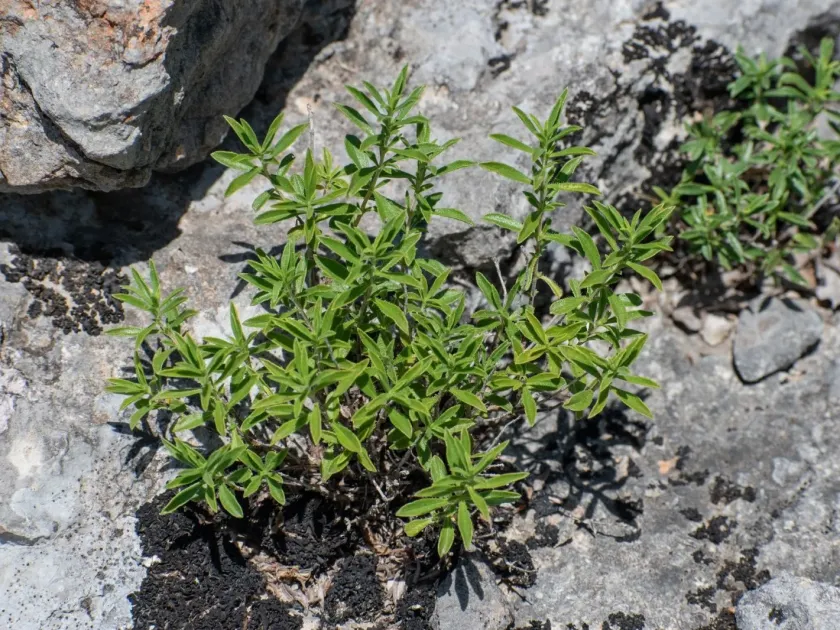
Douglas's savory (Satureja Douglasii), commonly referred to as Yerba Buena or Indian mint, is a perennial herbaceous plant belonging to the Lamiaceae family. It is native to the western parts of North America, typically found in moist, shaded forest floors and near stream banks.
The plant features trailing stems that can root at the nodes, allowing it to form a dense, aromatic ground cover. Its leaves are small, vibrant green, and possess a distinct minty fragrance with citrus undertones, making it a favorite for herb gardens.
For successful cultivation, Douglas's savory requires rich, well-draining soil with a neutral to slightly acidic pH. It performs best in partial shade, as the plant is sensitive to intense, direct afternoon sunlight which can scorch the foliage.
Climate-wise, the species thrives in areas with mild temperatures and high atmospheric humidity. It is relatively frost-tolerant but benefits from protection in regions with harsh winters, where it may be grown in pots to be brought indoors.
Cultural practices include consistent watering to keep the soil moist but not waterlogged. Good soil aeration is critical, as stagnant water is a primary cause of root health decline in this species.
Main diseases and pests
The primary threats to Douglas's savory are fungal infections like root rot and powdery mildew, which thrive in conditions with poor drainage, high humidity, and lack of air circulation around the foliage.
Pests such as aphids and spider mites can become an issue, particularly if the plant is grown indoors or in very dry, stagnant outdoor environments. Regular monitoring of the leaf undersides is recommended.
Management of pests should focus on integrated approaches, such as using gentle horticultural oils or introducing beneficial insects, to avoid the build-up of chemical residues on the harvestable parts of the plant.
Preventative care is the best strategy: ensure the soil is not overly compacted, provide enough space between plants, and remove any yellowing or decaying foliage promptly to stop the spread of infection.
If the plant becomes severely infected, prune the affected areas immediately and assess the irrigation system to ensure that moisture levels are appropriate for the plant's current needs.
Harvesting
Harvesting is best performed during the peak flowering stage, which is when the essential oil concentration in the leaves is at its highest, providing the most potent flavor and medicinal quality.
Use clean, sharp shears to snip the stems. It is important to harvest strategically, taking no more than one-third of the plant at a time to ensure it retains enough energy to recover and continue growing throughout the season.
Dry the harvested material in a dark, well-ventilated area away from direct sunlight. Temperatures should be kept below 35 degrees Celsius to preserve the volatile aromatic oils that define the plant's unique scent.
Store the dried leaves in airtight glass jars kept in a cool, dark place. This ensures the herbs remain flavorful and effective for culinary or medicinal use, such as herbal teas or seasoning, for several months.
Beyond its culinary value, Douglas's savory serves as an excellent decorative ground cover, adding texture and a pleasant fragrance to garden paths and shaded corners.