
Salad burnet
Sanguisorba minor Scop. subsp. balearica (Bourg. ex Nyman) Muñoz Garm. & C. Navarro
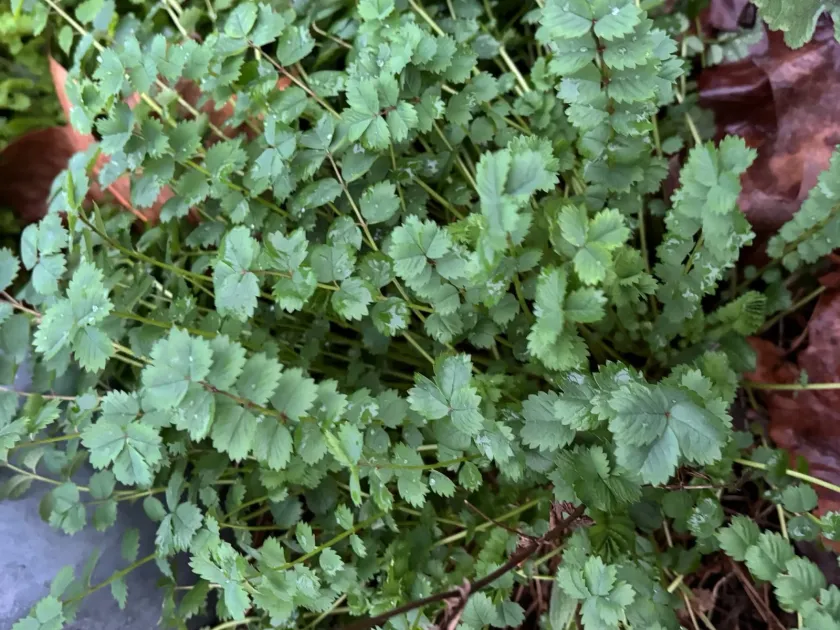
Description
Sowing dates
Salad burnet is a hardy perennial belonging to the Rosaceae family, known for its adaptability to various environmental conditions.
Seeds are typically sown in early spring or late autumn, ensuring they are placed at a shallow depth of about 1–2 cm.
For forage purposes, a spacing of 15–20 cm between rows is recommended to allow the plant to establish a strong root system.
Germination is relatively fast under warm conditions, though the plants spend the first year primarily building their leaf rosettes.
It is an excellent choice for inclusion in permanent pasture mixes due to its ability to persist for many years under grazing pressure.
Growing requirements
This crop thrives in well-drained, alkaline, or limestone-based soils and performs exceptionally well even in nutrient-poor conditions.
Salad burnet is renowned for its drought tolerance, making it an ideal candidate for dryland farming or arid agricultural regions.
While it prefers full sun, it can tolerate partial shade, though productivity will be significantly higher in sunnier locations.
The plant is frost-hardy and can remain green during mild winters, which is highly beneficial for extending the grazing season.
Excessive soil moisture or waterlogging should be avoided, as the root system is prone to rot in poorly drained environments.
Yield
As a forage crop, salad burnet provides a steady supply of nutritious greens that are highly palatable to cattle, sheep, and goats.
The yield of biomass is sustainable over several years, with the plant maintaining high protein content even when mature.
In managed grazing systems, the crop regenerates quickly after being browsed, ensuring consistent availability throughout the growing season.
Yield levels depend on soil quality and the frequency of utilization, but the plant is notably robust compared to many traditional grasses.
Strategic nitrogen fertilization can boost leaf production, although it is usually unnecessary if the plant is grown in fertile soil conditions.
Main diseases and pests
Salad burnet is generally resistant to major pests and diseases, which is a significant advantage for low-input agricultural systems.
Occasional issues with powdery mildew may arise during periods of high humidity or if plants are spaced too closely together.
Insects like leaf-eating beetles can cause minor aesthetic or structural damage but rarely reach levels that require chemical intervention.
Maintaining good airflow and avoiding over-irrigation are the most effective preventative measures against fungal pathogens.
Regular crop rotation and monitoring help ensure the longevity of the stand and prevent the buildup of soil-borne pests.
Harvesting
For high-quality forage, the plant should be harvested at the early flowering stage to balance total yield with nutrient density.
When cutting for hay, ensure a sufficient stubble height to protect the crown and facilitate rapid regrowth of the plants.
Seed harvesting should be performed when the heads turn brown; the material must be dried thoroughly to ensure seed viability.
In grazing scenarios, intermittent rotation allows the plants to recover fully between periods of heavy utilization by livestock.
Storing harvested material should be done in a cool, dry place to prevent degradation of the essential nutrients found in the foliage.