
Menzies' burnet
Sanguisorba menziesii Rydb.
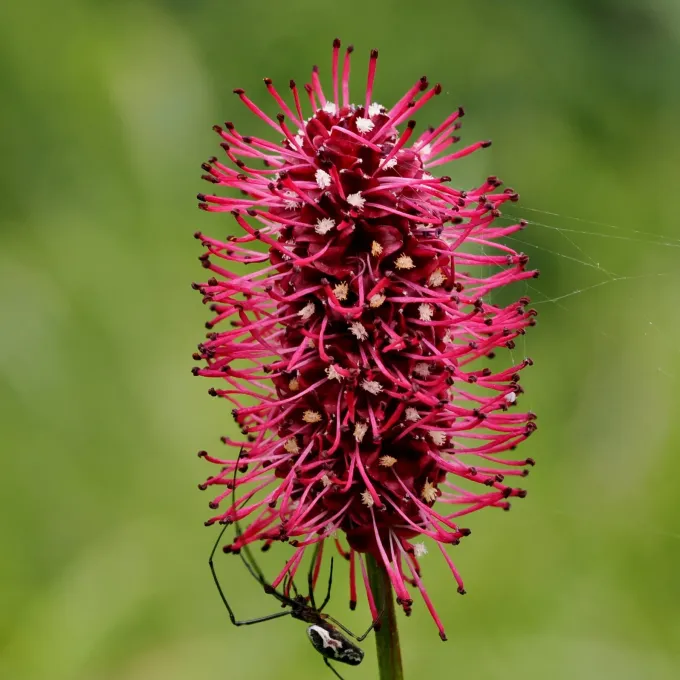
Description
Sowing dates
Sowing Menzies' burnet is most effective in early spring, once the soil has warmed up sufficiently to support germination in the outdoor environment.
Seeds benefit significantly from a period of cold stratification, which mimics natural winter conditions and breaks dormancy effectively.
Standard seeding depth should be kept at around 1 centimeter, ensuring the small seeds are not buried too deeply to maintain vigor during emergence.
Spacing requirements are generally set at 40 centimeters apart to allow the mature foliage to form a lush, uninterrupted canopy over the growing site.
Using a well-draining seed-starting mix in trays can improve the success rate for those who prefer to transplant established seedlings into the fields later.
Growing requirements
As a member of the Rosaceae family, Menzies' burnet thrives in full sun exposure, although it tolerates partial shade in warmer climates to protect leaves.
The plant requires consistently moist, fertile soil conditions, ideally with high organic matter content and a pH range between neutral and slightly acidic.
Adequate soil aeration is critical; heavy clay soils should be amended with organic compost to prevent waterlogging and facilitate healthy root development.
Climatic adaptability is one of the strengths of this species, as it is native to high-latitude environments and is highly resistant to freezing temperatures.
Consistent irrigation is vital during the growing season, especially during flowering stages when the plant requires maximum water to sustain its blooms.
Yield
The biomass yield of Menzies' burnet is highly reliable, providing significant amounts of foliage that can be used for various agricultural applications.
Proper nutrient management with balanced NPK fertilizers in early spring will maximize both vegetative growth and the intensity of the flowering display.
Harvesting for seed production should be performed when the flower spikes turn a deep brown color, indicating that the seeds have reached full maturity.
Multi-year productivity is high, with the plants showing consistent output from the second through the seventh year if proper maintenance is performed.
The plant is valued not only for its yield but also as a nectar source, which supports biodiversity and integrated pest management strategies in the field.
Main diseases and pests
Root rot and crown diseases are the primary threats to Menzies' burnet, usually resulting from poor soil drainage or excessive stagnant water in the spring.
Fungal leaf spot diseases may appear during periods of high humidity, necessitating proper spacing to ensure adequate air circulation between individual plants.
Aphids can occasionally cluster on the flower buds during the summer months, requiring mild insecticidal soap applications to prevent damage to the inflorescences.
Maintaining high hygiene standards in the field, including the removal of dead plant material at the end of the season, reduces disease carry-over.
Regular monitoring for pests and early-stage symptoms of rot is essential to keep the population healthy and productive over the long term.