
Salad burnet
Sanguisorba minor Scop.
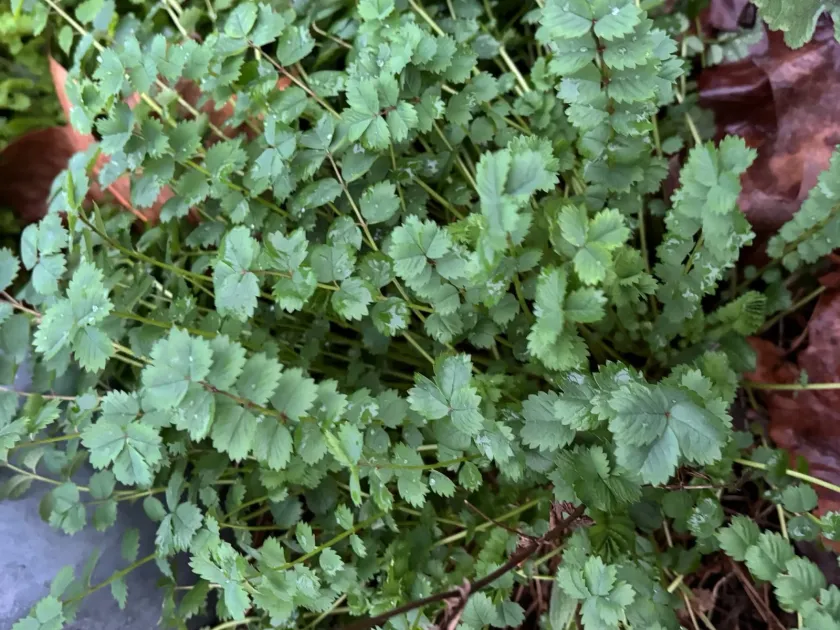
Description
Sowing dates
Salad burnet (Sanguisorba minor) is a hardy perennial belonging to the Rosaceae family. The crop is typically sown in early spring as soon as the soil warms up or in the late autumn for overwintering.
The optimal planting depth for seeds is 1–2 cm. When sowing, it is crucial to keep the plant density moderate, as the species prefers sufficient space to develop its characteristic basal rosette.
For high-quality foliage production, row spacing should be maintained at 30–45 cm, which ensures adequate nutrition and light exposure for optimal development.
Salad burnet seeds have moderate germination energy, so proper seedbed preparation and soil firming after sowing significantly improve emergence uniformity.
During the first year, the crop develops relatively slowly, focusing on establishing its root system, so it is recommended to prioritize weed management in the early growth stages.
Growing requirements
Salad burnet is known for its exceptional drought tolerance, making it a valuable crop for regions with limited irrigation and challenging, rocky soil types.
The plant thrives in well-drained, slightly alkaline, or neutral soils. It performs poorly in acidic environments, so liming is a mandatory agrotechnical practice to ensure healthy growth.
It is not sensitive to light conditions but achieves maximum biomass production in open, sun-drenched areas where standing water is not a risk factor.
Due to its deep taproot, the plant efficiently extracts moisture from lower soil layers, maintaining its lush green appearance even during periods of intense summer heat.
The crop is highly winter-hardy and can withstand significant temperature drops without damage to its root system, allowing for successful cultivation across various climatic zones.
Yield
The yield of salad burnet green mass varies based on usage intensity and management, typically ranging from 15 to 30 tons per hectare per season.
The primary agricultural use of the plant is as a protein-rich forage supplement for livestock, including sheep and cattle, as the leaves remain nutritious until late autumn.
The leaves are rich in Vitamin C, essential oils, and tannins, which makes the crop a promising candidate for the food industry as a culinary herb.
In animal diets, salad burnet is highly valued for its palatability and its ability to enrich the feed base with essential micronutrients during dry periods.
Productive stands of salad burnet can be maintained for 5–7 years, after which reseeding or rejuvenation is necessary to sustain high output levels.
Main diseases and pests
Salad burnet is generally a robust species, but excessive soil moisture can lead to root rots caused by waterlogging in the root zone.
Pests rarely cause significant damage to the crop, though in some years, aphids or weevils may feed on tender young leaves during the spring growth phase.
Among fungal diseases, rust may occasionally appear as brown spots on leaf blades, usually occurring in overly dense stands with poor airflow.
The best strategy for disease control involves strict crop rotation and preventing soil saturation, which acts as the most effective preventative measure.
Chemical control is rarely necessary and should only be applied if the economic threshold is exceeded, given the plant's inherent natural immunity.
Harvesting
Harvesting for green mass should be conducted during the active growth phase before flowering, when the foliage is at its most succulent and nutrient-dense.
Mechanical mowing at a height of 5–7 cm above the ground allows the plants to regrow quickly, providing 2–3 cuts per growing season.
When used as a culinary herb, leaves can be harvested selectively throughout the summer by cutting the most developed parts of the rosette.
Seed production fields are harvested once the inflorescences turn brown and seeds reach full maturity to minimize losses from shattering, which occurs quite easily.
After harvesting, it is essential to ensure proper drying in a well-ventilated area to prevent overheating and maintain the natural green color of the leaves.