
Arrowhead
Sagittaria sagittifolia L.
Description
Growing requirements
Arrowhead (Sagittaria sagittifolia L.) is a perennial aquatic plant belonging to the Alismataceae family. Naturally occurring throughout Eurasia, it has long been cultivated in various wetland systems due to its starchy tubers, which are highly valued as a nutritional resource in traditional culinary practices.
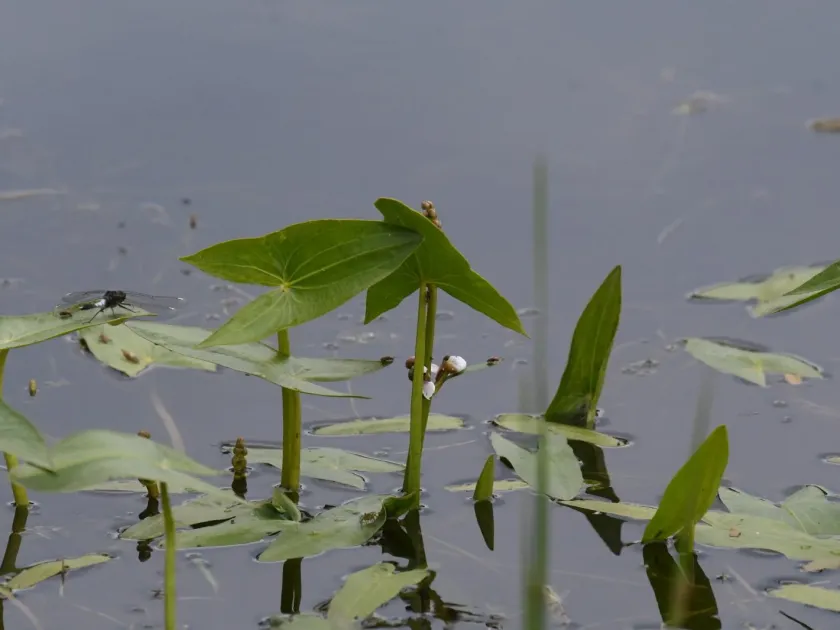
The plant exhibits remarkable morphological plasticity, producing different leaf types depending on the water depth. The aerial leaves are distinctly arrowhead-shaped, while the underwater ones are ribbon-like. This adaptation allows the plant to thrive in diverse wetland habitats, ranging from shallow pond edges to deeper water channels.
For successful agricultural production, Sagittaria requires nutrient-rich, soft, muddy, or silty substrates. It thrives best in stagnant or slow-moving water, where the soil can accumulate sufficient organic matter. Water depth should be maintained between 10 and 60 centimeters, ensuring that the plant receives maximum solar exposure.
The agronomic management of arrowhead involves periodic water level regulation and weeding to eliminate competing aquatic macrophytes. Planting is typically initiated in spring using small tuber sections or rhizome pieces, spaced to allow optimal development of the tuberous underground root system by the end of the growing season.
Economically, this plant is cultivated for its tubers, which are rich in carbohydrates. They are harvested as a starch-heavy vegetable, often consumed boiled, fried, or steamed. Due to its hardiness and adaptability, it is an excellent candidate for integrated aquaculture systems where crop production complements aquatic environment management.
Main diseases and pests
Common threats to arrowhead crops include infestation by aquatic insect larvae that feed on the foliage, potentially reducing the photosynthetic capacity of the plant. Furthermore, if water quality degrades or temperatures fluctuate drastically, the plant can become susceptible to various fungal rot diseases affecting the root and tuber structure.
Harvesting
The harvest period typically begins in late autumn when the aerial parts turn yellow and dry out. At this stage, the tubers have reached their peak starch concentration. Farmers extract the tubers by carefully dredging the soil or digging them out by hand, subsequently washing them thoroughly for market distribution or storage.