
Giant arrowhead
Sagittaria montevidensis Cham. & Schltdl.
Description
Sowing dates
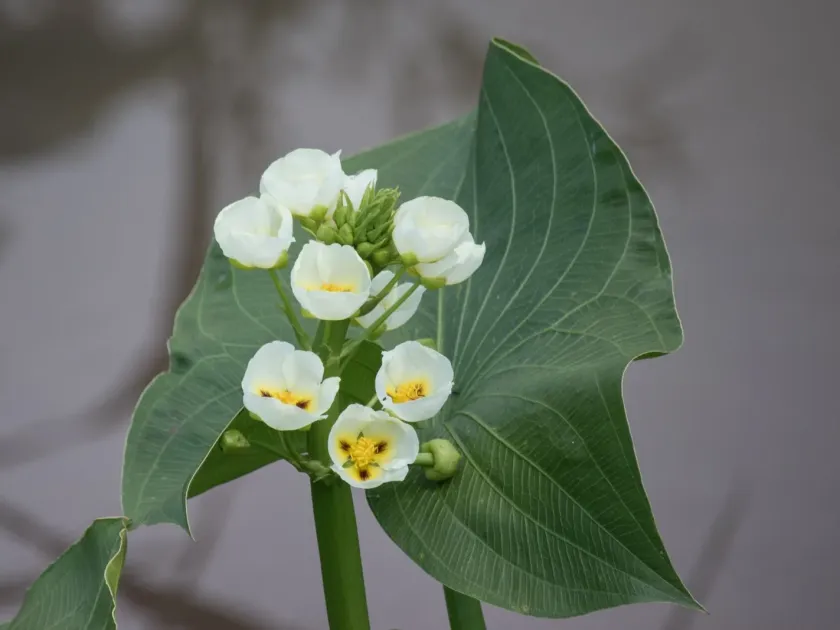
The Giant arrowhead (Sagittaria montevidensis) belongs to the Alismataceae family. It is a striking aquatic perennial recognized for its large, arrow-shaped leaves and tall, elegant inflorescences, making it a popular choice for water gardens.
Propagation is typically performed through seeds or the division of rhizomes. Seeds are sown in early spring into nutrient-rich, heavy soil, usually in shallow containers that are kept submerged under several centimeters of water to simulate natural conditions.
For successful germination, temperatures should remain consistently warm, ideally between +20°C and +25°C. High light intensity is crucial during the early stages of growth to ensure that seedlings develop robust stalks and foliage.
When propagating via rhizome division, sections containing active growth buds are separated and planted directly into containers filled with a mix of loam and organic matter. This method ensures faster establishment compared to seed sowing.
Planting density is an important factor to consider. Spacing plants approximately 45–60 cm apart prevents competition for nutrients and space, allowing each plant to reach its full size and produce healthy blooms throughout the summer.
Growing requirements
Native to the subtropical and tropical regions of South America, this plant thrives in warm, humid environments. It is not frost-tolerant and requires specific management in regions with cold winters, such as moving it indoors or into heated greenhouses.
The preferred soil is a heavy, nutrient-dense mix, such as clay-based loam. The substrate should be rich in organic content to support the vigorous growth of the plant's extensive root system.
Water depth is a primary requirement for the Giant arrowhead. While it can tolerate depths up to 30–40 cm, it grows most effectively in shallow margins where its leaves can easily emerge above the water surface.
Sunlight is the most significant factor for its vitality. Full sun exposure is essential; if the plant is grown in even partial shade, its stems become weak and leggy, and it will produce significantly fewer flowers.
Adequate water circulation is beneficial but not strictly required if the water quality is kept high. Stagnant water can sometimes lead to issues if the plant is overcrowded or if organic waste builds up significantly.
Main diseases and pests
Fungal pathogens such as rust or mildew can affect the foliage, especially in stagnant or poorly ventilated environments. Prompt removal of damaged leaves is necessary to prevent the spread of these pathogens across the collection.
Aphids and spider mites are common pests that target the tender, emerging leaves and flower stalks. These pests can rapidly drain the plant's resources, causing yellowing and stunted growth if left untreated.
Root rot is a major threat often caused by poorly drained or compacted soil, or water contaminated with high levels of anaerobic bacteria. Ensuring that the soil remains oxygenated is key to preventing this issue.
Integrated pest management, including the use of aquatic-safe soaps or biological control agents, is recommended. Regular inspection of the plant's undersides for pest clusters can significantly mitigate the risk of infestation.
Maintaining a balanced ecosystem in the water feature, including the presence of beneficial microorganisms, helps the plant remain resilient against common diseases and environmental stressors.