
Southern arrowhead
Sagittaria australis (J. G. Sm.) Small
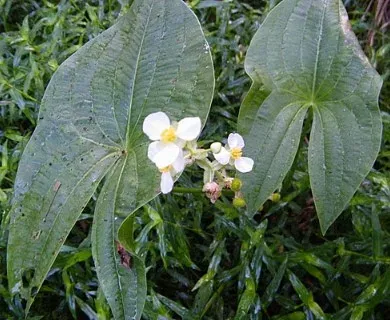
Description
Sowing dates
Southern arrowhead is a perennial aquatic plant typically propagated in the spring season once water temperatures consistently remain above 15 degrees Celsius.
Commercial cultivation predominantly relies on vegetative propagation, utilizing rhizome division or planting tuberous offsets that develop on the plant's stolons.
While seed propagation is biologically possible, it is rarely used in large-scale farming due to the lengthy stratification requirements and irregular germination rates observed in natural conditions.
Planting density is carefully managed to ensure each individual plant has sufficient space to develop its root system, usually resulting in a density of 4 to 6 plants per square meter.
Correct positioning of the root stock within the muddy substrate is crucial; improper planting depth can lead to stunted growth or detachment of the plant in running water systems.
Growing requirements
As a member of the Alismataceae family, the Southern arrowhead thrives in wetland environments, requiring consistent standing or slow-moving water throughout its entire growth cycle.
The ideal substrate consists of silt-rich, fertile soil with a near-neutral pH, providing the necessary minerals to support robust development of its characteristic leaves and tubers.
The plant is highly sensitive to photoperiod and temperature, preferring sunny locations with long growing seasons to ensure sufficient energy accumulation for tuber development.
Water quality monitoring is an essential part of management, as excessive nutrient loading can trigger algae blooms that compete with the crops for light and dissolved oxygen.
The crop demonstrates adaptability to seasonal water fluctuations, yet it is vital to keep the root zone submerged to prevent dehydration, which can be fatal to the plant during peak summer.
Yield
The economic value of Southern arrowhead is primarily tied to its edible tubers, which are harvested after the vegetative stage, providing a nutritious starch source.
Yield metrics are largely determined by the depth of the fertile soil layer and the duration of the thermal season, which dictates how long the plant can synthesize and store carbohydrates.
Intensive farming techniques, including balanced nutrient management and consistent water depth control, can significantly improve the total biomass yield per hectare.
Successful production relies on the plant’s ability to remain productive until the onset of autumn, as the final weeks of growth are critical for tuber maturation and size increase.
Yield quality is assessed based on tuber weight, uniformity, and resistance to environmental stressors that might otherwise lead to premature decay or small, unmarketable tubers.
Main diseases and pests
The plant is susceptible to various fungal pathogens that target foliage when humidity levels are high and air circulation across the water surface is insufficient.
Common pests include aquatic mollusks and certain insect larvae that feed on tender shoots, potentially reducing the plant's overall photosynthetic capacity during the early growth stages.
Soil-borne pathogens present a significant long-term threat, often accumulating in the substrate if the same site is utilized for consecutive growing seasons without proper rotation.
Effective pest management involves integrated practices, such as maintaining water quality, promoting biodiversity to encourage natural predators, and selecting clean propagation materials.
Proactive monitoring of the crop helps in identifying early signs of infestations, allowing for targeted interventions before the pest population impacts the total annual yield.
Harvesting
The harvesting process for Southern arrowhead is typically carried out in late autumn once the foliage has turned yellow and died back, signaling that nutrients have been transferred to the tubers.
Mechanical harvesting involves draining the wetland plots or utilizing underwater extraction tools to carefully retrieve the tubers from the silt without causing damage to the crop.
Post-harvest handling requires immediate washing to remove mud and organic debris, followed by a sorting process to categorize tubers based on size and physical integrity.
The product must be stored under cool, humid conditions to maintain its shelf life, as the high water content of the tubers makes them prone to wilting and spoilage if not handled correctly.
Optimizing the harvest logistics ensures that the tubers are processed efficiently, preventing degradation and maintaining the high quality expected by consumers and food processors.