
Sagittaria graminea
Sagittaria graminea Michx.
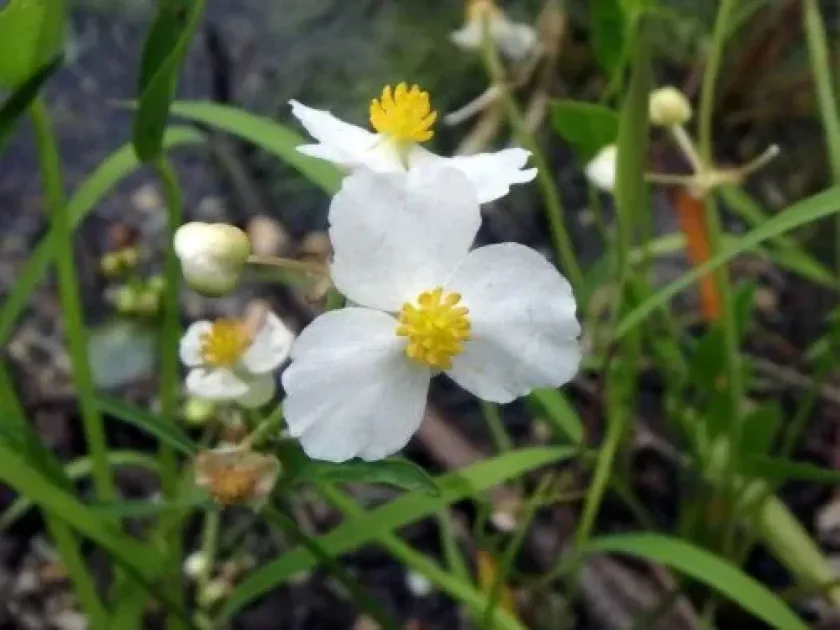
Description
Sowing dates
Planting Sagittaria graminea in artificial ponds or specialized agricultural settings is best performed in the spring when water temperatures rise above 12-15 degrees Celsius. Late April or May is considered the optimal window, allowing the rhizomes to establish securely before the peak growing season.
The propagation of this crop is most commonly achieved through vegetative means, by dividing rhizomes or utilizing the daughter rosettes that form on the stolons. For seed propagation, sow the seeds into a moist substrate or directly into shallow water, ensuring a steady supply of nutrients.
A crucial aspect is the planting depth: young plants should be placed at a depth of 5 to 20 centimeters. As the plant matures, it can adapt to deeper water levels, but the initial stage requires strict control over the water level to ensure stability.
For intensive cultivation, it is recommended to maintain a spacing of at least 30-40 centimeters between individual plants. This prevents competition for light and allows the root system to develop fully within the bottom substrate.
In closed systems or greenhouses, planting times can be adjusted provided that a stable light regime and water temperature are maintained. The use of grow lights can accelerate germination and early development of the foliage.
Growing requirements
Sagittaria graminea belongs to the Alismataceae family and is a typical hydrophyte. It is a perennial plant native to the shallow waters of rivers, lakes, and wetlands in North America.
The crop prefers well-lit areas of water bodies, as a lack of light leads to elongated petioles, loss of aesthetic value, and reduced biomass growth rates. While the plant can tolerate partial shade, it achieves maximum productivity under direct sunlight.
Soil requirements include a silty, organic-rich bottom. The optimal water pH range is from slightly acidic to neutral, which facilitates the best absorption of nutrients from the sediment.
The temperature range for successful vegetation is between 18 and 25 degrees Celsius. Despite its high winter hardiness in its natural range, it is essential in artificial cultivation to prevent the rhizomes from freezing completely during the winter.
Water should be flowing or periodically refreshed, as stagnant conditions can promote the development of pathogenic microflora. High oxygen content in the bottom layer positively affects the development of the plant's root system.
Yield
The economic use of Sagittaria graminea is primarily associated with the phytoremediation of water bodies and aquaculture. The plant effectively extracts excess nitrates and phosphates, thereby purifying the aquatic environment.
In ornamental gardening, the "yield" is measured by the biomass growth, which creates dense thickets. High planting density allows the crop to be used effectively for stabilizing the shoreline of natural and artificial ponds.
The biomass of Sagittaria graminea can be considered potential raw material for composting after harvesting, as the plant is rich in organic compounds. However, industrial use as fodder is limited due to the specifics of its habitat.
The number of daughter shoots (stolons) per plant can reach several dozen per season, ensuring rapid coverage of a designated water area. Under favorable conditions, the crop can colonize significant areas within a single growing cycle.
Within integrated aquaponic systems, the plant serves as a biological filter, converting waste from aquatic organisms into accessible forms, which indirectly increases the overall productivity of the entire system.
Main diseases and pests
The main threats to Sagittaria graminea include various types of fungal leaf infections that occur during sharp temperature fluctuations or excessive humidity in the air above the water surface.
Pests such as leaf beetles and aphids can attack the emergent part of the plant during the hot months. Regular inspection of the leaves allows for the early detection of insect colonies and the implementation of containment measures.
Rhizome rot is often triggered by an imbalance of nutrients in the substrate or excessive organic pollution of the water, which leads to a dissolved oxygen deficit. Prevention involves maintaining optimal planting density.
Competition from invasive algae can suppress the growth of Sagittaria in the early stages. It is important to conduct timely weeding and monitoring for the spread of duckweed or filamentous algae that block light penetration.
Overpopulation of mollusks in the pond also poses a potential danger, as they may feed on young shoots and damage the delicate tissue of the leaf blades, leading to a general weakening of the plant.
Harvesting
Harvesting or thinning of Sagittaria graminea plantings is typically conducted at the end of the growing season, in autumn, when the emergent foliage begins its natural senescence.
If planting material is required, rhizomes should be extracted from the substrate carefully to avoid damaging the main growth points. Tools must be disinfected to prevent the spread of infections.
For pond maintenance, excess biomass is removed manually or using special nets. It is important to remove plant debris from the water to prevent decay, which would otherwise release nutrients back into the ecosystem.
The cut green mass can be used as mulch or as a component for compost piles after being dried to reduce weight and volume.
If Sagittaria is grown as an ornamental crop, harvesting is performed when the plants lose their aesthetic appeal or to maintain specific pond boundaries according to the landscape design.