
Rungia parviflora
Rungia parviflora
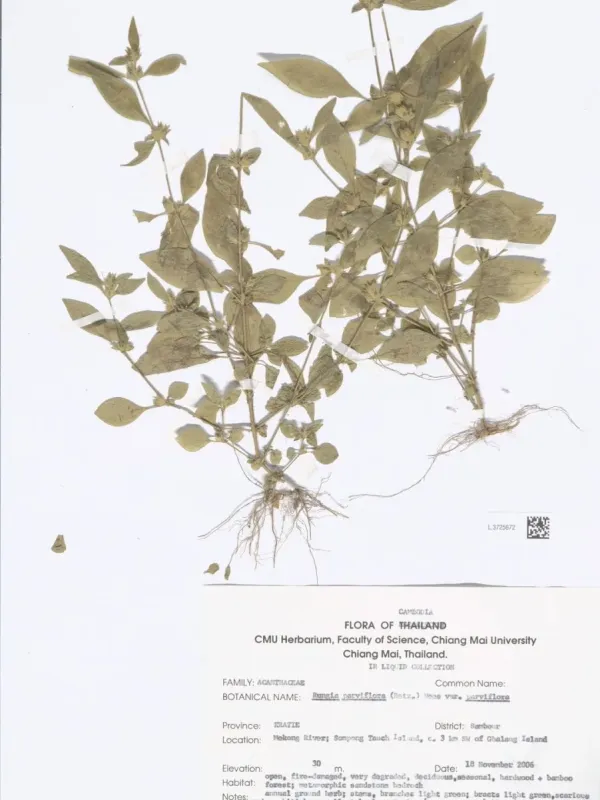
Description
Sowing dates
Rungia parviflora belongs to the Acanthaceae family. This species is often cultivated as a leafy vegetable due to its tender foliage and nutritional properties, which have made it a topic of interest in small-scale agriculture.
Seed sowing should be performed in seed trays or nursery pots starting in late winter. Seeds require a consistent temperature of 20–25 degrees Celsius and high humidity to achieve uniform germination.
Transplanting into the garden or greenhouse should only occur once the threat of frost has passed completely. The seedlings are sensitive to low temperatures, which can severely stunt their initial growth phase.
Planting density is crucial for crop development. It is recommended to maintain a spacing of 30–40 centimeters between plants to ensure proper aeration and light penetration for the lower leaves.
Starting with healthy, hardened-off transplants is superior to direct seeding, as it allows the plants to establish a robust root system before the onset of the hottest summer months.
Growing requirements
Rungia parviflora thrives in partially shaded locations, particularly in tropical or subtropical regions where excessive direct sunlight can scorch the leaves and reduce the quality of the harvest.
The soil should be fertile, well-draining, and rich in organic matter. A pH level between 6.0 and 7.0 is ideal to ensure optimal nutrient uptake and overall plant vitality.
Consistent moisture is necessary throughout the growing season. The plant has a high transpiration rate, so mulch is recommended to prevent soil moisture loss and maintain a stable root environment.
Optimal growth occurs between 18 and 28 degrees Celsius. Exposure to temperatures below 10 degrees Celsius can cause cold shock, leading to leaf discoloration and a significant reduction in overall yield.
Water management is key to preventing plant stress. While the plant appreciates regular watering, the soil must not become waterlogged, as this often leads to root rot and pathogen development.
Main diseases and pests
Soil-borne pests, such as wireworms and various beetle larvae, pose a significant risk to Rungia parviflora by damaging the root system, often resulting in sudden wilting of the entire plant.
Fungal infections, including powdery mildew, frequently occur in environments with poor air circulation and high humidity. Proper spacing and pruning of dense foliage are essential preventative measures.
Aphids are common pests that target new leaf growth. Integrated pest management, including the use of insecticidal soaps or natural predators, is recommended to control populations without damaging the plant.
Root rot caused by Phytophthora species can occur if drainage is insufficient. Ensuring the soil is light and avoiding standing water around the base of the plant is vital for healthy production.
Slugs and snails may attack tender leaves, particularly in damp weather. Protecting the plants with physical barriers or organic baits can help minimize damage during the early stages of growth.
Harvesting
Harvesting usually begins 8–10 weeks after transplanting. The most effective method is to cut the young, tender stems rather than pulling the whole plant, allowing the plant to regenerate.
Frequent harvesting of apical shoots encourages the development of lateral branches, which leads to a higher density of foliage and increased cumulative yield over the entire growing season.
The leaves of Rungia parviflora have a mild flavor profile and are versatile in the kitchen. They are commonly used fresh in salads, soups, and traditional stir-fry recipes.
Due to the high water content of the leaves, the harvested produce is perishable. It should be kept in a cool, ventilated area or refrigerated immediately to maintain quality for several days.
For industrial processing or preservation, the harvested leaves can be quickly blanched and frozen. This method preserves the nutritional integrity of the crop for off-season use.