
September bells
Rothmannia globosa
Description
Growing requirements
Rothmannia globosa, commonly known as September bells, is a member of the Rubiaceae family. This evergreen tree is native to the coastal and forest regions of Southern Africa, where it thrives in warm and humid conditions.
The plant requires well-drained, nutrient-rich soil to achieve optimal growth. While it is adaptable to various soil textures, maintaining high organic matter content is essential for long-term health and vitality.
Regarding climate, it prefers sheltered positions with partial shade. It is not frost-tolerant and requires protection if grown in regions with cool temperatures during the winter months.
Watering practices should focus on consistency. During the growing season, the tree appreciates adequate hydration, but care must be taken to avoid waterlogging the roots, which can lead to stress.
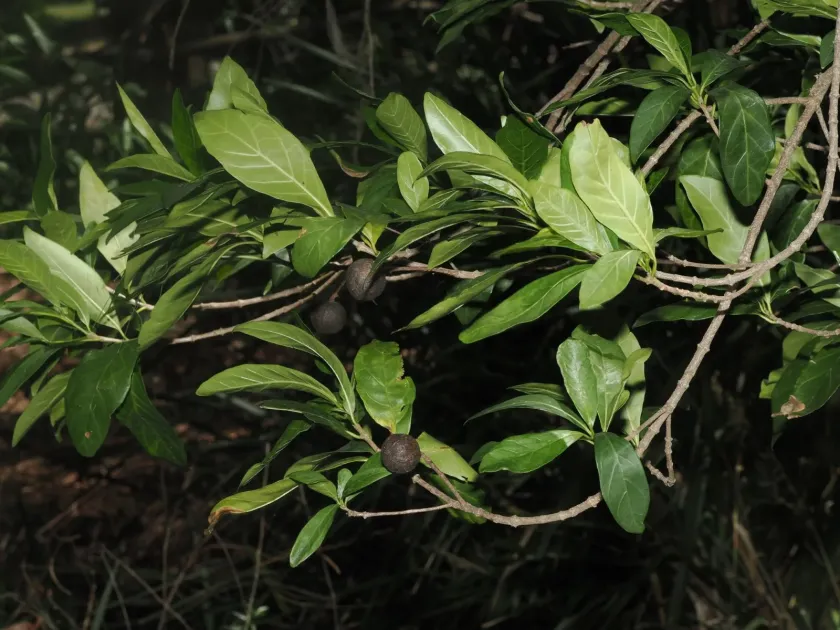
Cultivation often includes selective pruning to maintain a desirable shape, as the plant naturally tends to grow into a dense, multi-stemmed shrub or a small tree with glossy, dark green foliage.
Main diseases and pests
Common pests include aphids that cluster on young shoots and buds. These insects can be controlled using soft soaps or natural oils if identified early.
Scale insects may attach to the woody stems and undersides of leaves, causing minor stunted growth. Regular inspection of the bark is recommended as a preventative measure.
Fungal leaf spot can occur if the foliage remains wet for extended periods in high-humidity environments. Improving air circulation around the crown is the most effective management strategy.
Spider mites are known to be problematic during dry, hot spells. Increasing the ambient humidity around the plant can help discourage these infestations.
Monitoring the soil moisture levels is vital, as root rot diseases typically occur when drainage is poor and the roots are subjected to persistent anaerobic conditions.
Harvesting
While primarily an ornamental species, some local traditions utilize various parts of the tree, though this is not considered a large-scale agricultural activity.
Seeds can be collected from mature, globose fruits once they turn a deep brown or black color. Proper cleaning and drying are necessary for successful propagation in the next cycle.
The fruits themselves are not typically harvested for food, as their primary value lies in their role in the ecosystem and their aesthetic appearance in garden environments.
Pruning debris from maintenance activities should be cleared away to keep the area around the base of the tree clean and free from decaying organic matter.
For ornamental nurseries, propagation is usually conducted via semi-hardwood cuttings during the active growth phase to ensure clonal fidelity and faster development.