
Rosularia sempervivum
Rosularia sempervivum
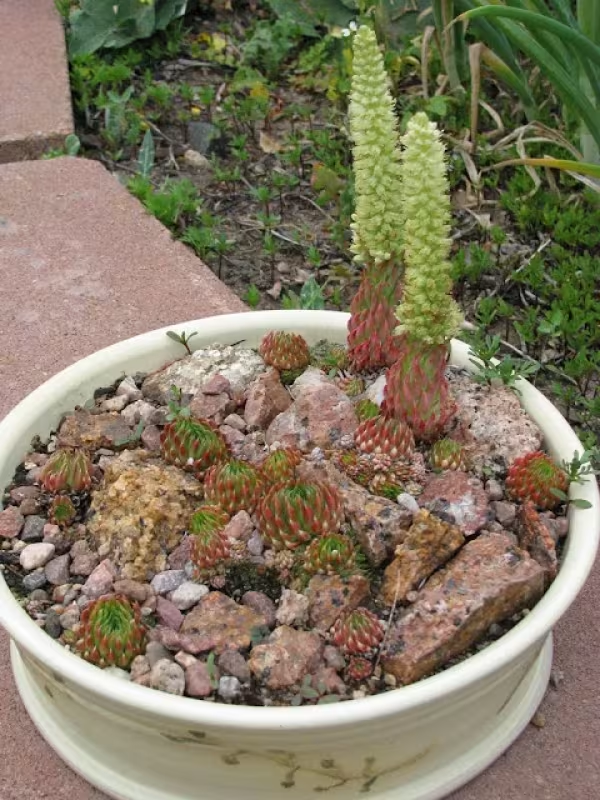
Description
Growing requirements
Rosularia sempervivum is a perennial succulent belonging to the Crassulaceae family, known for its ability to thrive in harsh, mountainous environments across parts of Western Asia. It forms dense, evergreen rosettes that are highly efficient at storing water during dry spells.
The primary agronomic requirement for this plant is excellent drainage. Whether grown in pots or open ground, the soil must be porous, consisting primarily of grit, gravel, and sand mixed with a minimal amount of organic substrate to mimic native rocky habitats.
Exposure to bright sunlight is essential for maintaining the plant's structural integrity and characteristic coloration. In low-light conditions, the rosettes tend to stretch, losing their compact aesthetic and becoming weaker against physical stress.
The plant demonstrates high tolerance to temperature fluctuations, which is typical for high-altitude flora. However, it requires a well-defined dormancy period during winter, characterized by cool temperatures and minimal moisture to prevent physiological stress.
Watering practices must be disciplined. During the growth phase, the substrate should be allowed to dry completely between sessions. Excessive moisture, especially in the winter, is the leading cause of failure for this species in cultivation.
Main diseases and pests
Root rot and crown rot are the most significant threats to Rosularia sempervivum, almost always triggered by improper watering or poor substrate aeration. Once rot reaches the center of the rosette, the plant is typically impossible to recover.
Mealybugs are the most persistent insect pests, often hiding in the dense folds of the leaves. These pests weaken the plant by feeding on its sap, creating entry points for secondary fungal infections that can destroy the colony.
Spider mites may pose a threat during long periods of extreme heat and low humidity. Regular monitoring of the foliage and increasing air circulation can prevent these pests from establishing a population in the succulent collection.
Preventative measures include using clean, sterilized growing media and ensuring that rosettes have sufficient space to prevent fungal growth caused by stagnant air. Keeping the crown of the plant dry after watering is a vital cultural practice.
By implementing a strict quarantine for new additions and monitoring for signs of stress, growers can maintain a healthy population of this species. Professional monitoring allows for the early detection and management of localized infestations.