
Rhodanthe manglesii
Rhodanthe manglesii Lindl.
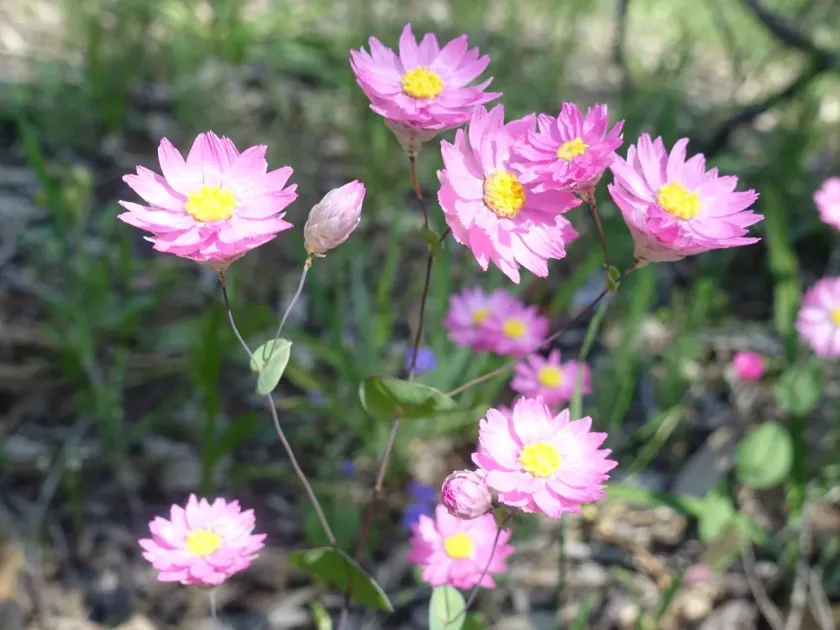
Description
Sowing dates
Rhodanthe manglesii is an annual plant that is primarily grown from seeds either directly in the garden or started in containers. Sowing typically takes place in late spring once the danger of frost has passed.
For earlier flowering, seeds can be started indoors about 6-8 weeks before the last frost date. It is essential to use biodegradable peat pots, as the plant has a delicate root system and does not transplant well.
The seeds are very fine and require light to germinate. When sowing, they should only be lightly pressed into the surface of the growing medium rather than being buried deep, keeping the soil consistently moist.
A warm environment with temperatures around 18-20°C is ideal for germination. Once seedlings emerge, they should be placed in a bright location to prevent legginess and ensure sturdy stems develop.
Direct sowing in the garden should be done in well-prepared, loose soil. Thinning the seedlings is crucial to provide enough space, usually 15-20 centimeters apart, which encourages better airflow.
Growing requirements
Native to Western Australia, this plant belongs to the Asteraceae family. It is naturally adapted to arid environments and thrives in sunny, open areas where it receives maximum exposure to sunlight.
The soil must be well-draining, preferably sandy or gritty. Rhodanthe manglesii is highly susceptible to root rot if grown in heavy, clay-like soils that hold too much moisture for extended periods.
Watering should be done sparingly. It is better to let the soil dry out significantly between waterings. During periods of high humidity or rainfall, the plants may need protection to prevent fungal issues.
This species does not require rich or heavily fertilized soil. In fact, excess nutrients can lead to lush green foliage at the expense of floral production and can make the stems weaker.
Good air circulation is vital for this plant. Crowded plantings often result in damp conditions, which are perfect for pathogens, so thinning is as important as sunlight exposure for the plant's health.
Main diseases and pests
The most common threats are fungal diseases such as botrytis and root rot, which are triggered by poor drainage or high humidity. These conditions are the primary cause of plant loss in non-native environments.
Aphids and spider mites are the main insect pests that may attack the foliage. They should be monitored regularly, and interventions should be made using insecticidal soaps if an infestation occurs.
Improper sanitation in the garden can lead to the spread of soil-borne pathogens. Removing spent or diseased plant material promptly is a critical step in maintaining a healthy crop for the season.
In regions with cold, wet summers, cultivating these plants in containers or raised beds is recommended. This setup provides better control over soil moisture and allows for better drainage management.
If powdery mildew appears on the leaves, ensure there is adequate spacing between plants to improve ventilation and reduce the humidity level around the leaf surface.
Harvesting
Rhodanthe manglesii is widely recognized as a premium choice for dried flower arrangements. Its paper-like bracts retain their color and structural integrity for years when harvested at the right time.
The harvest should occur when the flower buds are just beginning to open. Harvesting too late, when the central disk is fully mature, will lead to the flower shedding its florets as it dries.
Cut the stems early in the morning after the dew has evaporated. Remove all the lower leaves immediately after harvesting to facilitate drying and prevent the stems from rotting.
Drying is best accomplished by hanging small bunches upside down in a dark, cool, and well-ventilated space. Darkness is essential to preserve the vibrant pink or white pigments of the bracts.
Once dried, the flowers become fragile. Handle them with care to avoid breaking the delicate flower heads, and store them in a moisture-free environment to prevent re-absorption of humidity.