
Pink paper daisy
Rhodanthe chlorocephala (Turcz.) Paul G. Wilson subsp. rosea (Hook.) Paul G. Wilson
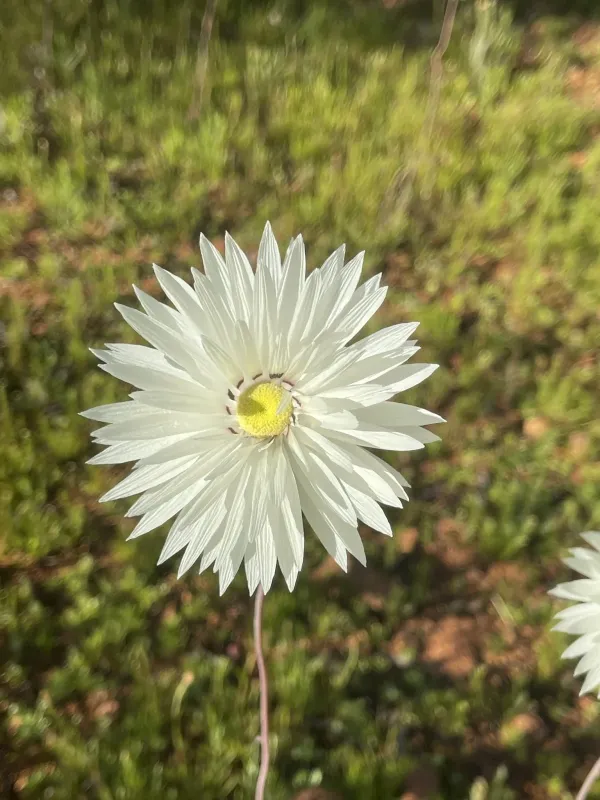
Description
Sowing dates
The Pink paper daisy is a typical annual plant, so for early flowering, seeds should be sown in trays in March or April. In regions with a mild climate, direct outdoor sowing is possible once the danger of late frost has passed, usually in the second half of May.
When sowing, distribute seeds over the surface of a nutrient-rich substrate, covering them lightly with vermiculite or sand, as they require light to germinate effectively. The optimal temperature for germination is between 18 and 20 degrees Celsius.
Pricking out the seedlings must be done with extreme care, as the root system of this species is highly sensitive to damage. It is often recommended to use peat pots to minimize transplant shock when moving the plants to their permanent location.
Seedlings should be planted in the ground with 20–25 centimeters of spacing between plants. It is crucial to ensure sufficient space for air circulation, which is vital for the health of the foliage and prevents stem rot.
Seeds maintain viability for 2–3 years if stored in a cool, dry place. To achieve maximum uniformity in the plot, it is recommended to use fresh seeds with a high germination energy score.
Growing requirements
The crop is highly demanding of sunlight; even slight shading causes the stems to stretch and reduces the intensity of the bract coloration. The planting site must be open and sheltered from strong, damaging winds.
Soils for Rhodanthe must have excellent drainage, as the plant absolutely cannot tolerate waterlogging in the root zone. Light sandy or sandy loam soils with a neutral or slightly acidic pH level are considered ideal.
During the growing season, the plant is moderately drought-tolerant; however, for high-quality decorative stems, regular but not excessive watering is required during the active growth phase. Excessive atmospheric humidity often triggers fungal infections.
Fertilizer application should be strictly controlled. An excess of nitrogen fertilizers leads to vigorous vegetative growth at the expense of flowering and stem strength. Balanced phosphorus-potassium formulas are recommended for optimal results.
The temperature regime should be moderately warm. The species does not handle prolonged rainy periods accompanied by low temperatures well, so in areas with humid summers, the crop requires special agronomic monitoring.
Main diseases and pests
The main threats to the Pink paper daisy are root and collar rots, which occur due to poor drainage or irregular watering practices. To prevent these issues, avoid planting the flowers too densely.
In high-humidity conditions, plants may be affected by powdery mildew, which appears as a white coating on the leaves. Control includes the use of systemic fungicides and the immediate removal of infected plant parts.
Regarding pests, aphids are the most significant danger, as they feed on the sap of buds and young leaves. The use of broad-spectrum insecticides allows for effective control of insect populations.
Spider mites may appear in hot, dry conditions. If signs of damage are detected, it is recommended to apply acaricides, ensuring thorough coverage of the undersides of the leaf blades.
To prevent the spread of diseases, it is necessary to practice crop rotation and avoid planting on the same site for at least 3–4 years. Keeping the plot free of weeds is also important, as they can harbor various pests.
Harvesting
The inflorescences should be harvested at the stage of incomplete opening, when the bud has not yet fully bloomed but has already acquired its characteristic color. This ensures the best preservation of the flower's natural shape after drying.
Harvesting should be conducted in dry weather after the morning dew has evaporated. Stems should be cut with sharp shears to the desired length, taking care not to damage the root crown of the remaining plants in the field.
Drying is performed by hanging the stems in a dark, well-ventilated room. Direct sunlight during the drying process is prohibited, as it causes rapid pigment fading and a significant loss in commercial quality.
To preserve the shape of the flower heads, it is important to ensure sufficient airflow. The natural drying process usually takes between one to two weeks, depending on the relative humidity of the air.
Once drying is complete, the everlasting flowers can be treated with special fixing sprays to prevent petal shattering during storage. Properly harvested and dried material retains its decorative value until the next season.