
Rhodanthe chlorocephala
Rhodanthe chlorocephala (Turcz.) Paul G. Wilson
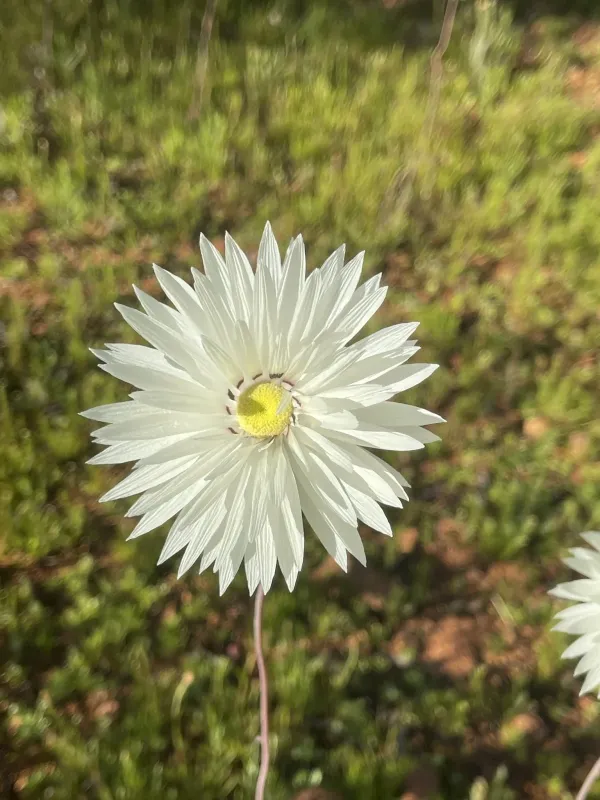
Description
Sowing dates
Rhodanthe chlorocephala is a heat-loving annual plant belonging to the Asteraceae family. In temperate regions, seeds are sown indoors in March or April to ensure flowering by mid-summer.
Direct sowing in the open field is only possible after the threat of frost has passed and the soil has warmed to 15-18 degrees Celsius. Seeds are sown at a depth of no more than 0.5 cm, as they require light for germination.
To obtain uniform emergence, the substrate must be light, sandy, and well-aerated to prevent young sprouts from rotting.
When grown via seedlings, pricking out should be done at the stage of two true leaves into separate containers to avoid damaging the fragile root system.
The optimal planting density is 20 by 20 or 25 by 25 centimeters, providing the plant with sufficient nutrition and good air circulation.
Growing requirements
This crop is native to the arid regions of Western Australia, so it possesses high drought tolerance and requires intense solar illumination.
Successful cultivation requires well-drained, sandy loam or loamy soils with a neutral or slightly acidic pH level.
Rhodanthe strictly does not tolerate waterlogging or water stagnation, which can lead to rapid fungal infection of the root system.
The plant adapts successfully to poor soils, although applying moderate doses of potassium-phosphorus fertilizers during the budding period significantly improves inflorescence quality.
In conditions of high air humidity, the plant needs additional ventilation, as excess moisture triggers the development of powdery mildew.
Main diseases and pests
The main threat to the crop is excessive soil moisture, which provokes the development of root rots and Fusarium wilt.
In dense plantings, plants may be susceptible to powdery mildew, necessitating the timely removal of infected specimens.
Common pests found in Rhodanthe plantings include aphids and spider mites, which feed on the sap of young leaves and flower buds.
To control pests, systemic insecticides or biological control methods are used, especially if the crop is grown for high-value ecological purposes.
Disease prevention consists of maintaining a proper irrigation schedule and choosing a planting site that excludes shading and cold air pockets.
Harvesting
Harvesting of the inflorescences is performed at the stage of incomplete opening, before the central part of the flower head begins to shed pollen.
The cut stems are tied into small bunches and hung upside down in a dark, dry, and well-ventilated room for drying.
Properly dried Rhodanthe flowers retain their shape, texture, and vibrant color for several years, remaining a sought-after material for the floral industry.
Harvesting is carried out in dry weather, preferably in the morning hours after the dew has evaporated, to prevent staining of the petals.
- Stem length for high-quality cut flowers should be at least 25-30 cm.