
Intermediate wintergreen
Pyrola media
Description
Growing requirements
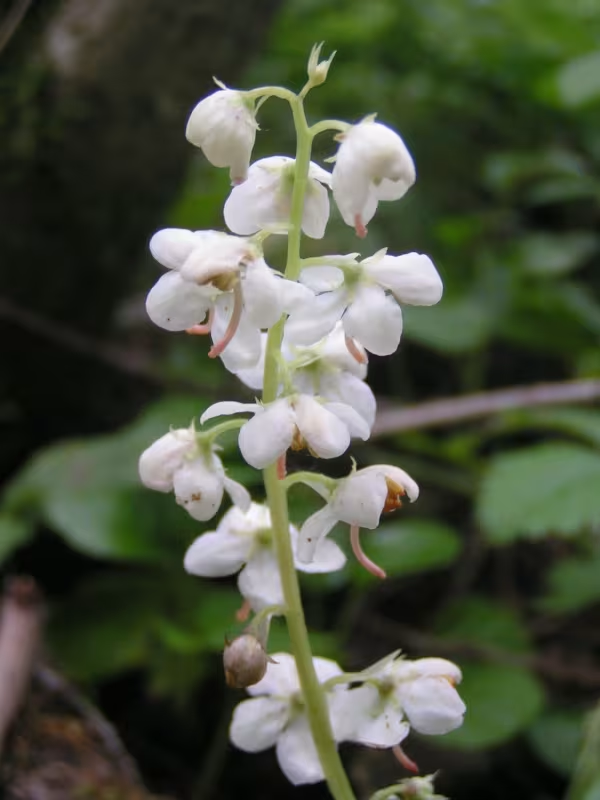
Intermediate wintergreen, known scientifically as Pyrola media, is a perennial herbaceous plant belonging to the Ericaceae family. It is typically recognized by its basal rosettes of evergreen, leathery leaves and characteristic drooping, bell-shaped white or pinkish flowers.
The plant originates from the woodland regions of Northern and Central Europe. It prefers damp, shady environments found in coniferous and mixed forests, often growing in mossy areas where the soil is rich in organic matter and acidic in reaction.
Regarding soil requirements, the species is highly sensitive to substrate conditions. It relies on specific mycorrhizal associations to obtain nutrients, which makes it extremely difficult to cultivate in conventional garden or field settings without the proper fungal microflora.
Climate conditions play a crucial role in the survival of Pyrola media. It requires moderate temperatures and high humidity levels, avoiding direct sunlight and extreme heat, which can cause rapid desiccation of the shallow root system.
In terms of economic use, the plant is valued in traditional herbal medicine for its antiseptic and anti-inflammatory properties. However, it is not grown as a commercial crop, and populations are generally protected due to their slow growth rate and specific ecological niche.
Main diseases and pests
The primary threats to Pyrola media involve habitat destruction through deforestation and changes in forest management practices. As an understory plant, it is extremely vulnerable to clearing and any activity that increases light intensity on the forest floor.
Pests affecting the plant in its natural habitat are generally not categorized as major threats compared to environmental stressors. Fungal leaf spots can occur during periods of prolonged stagnant humidity, though these are rarely a cause for concern in healthy, balanced woodland populations.