
Liverleaf wintergreen
Pyrola asarifolia
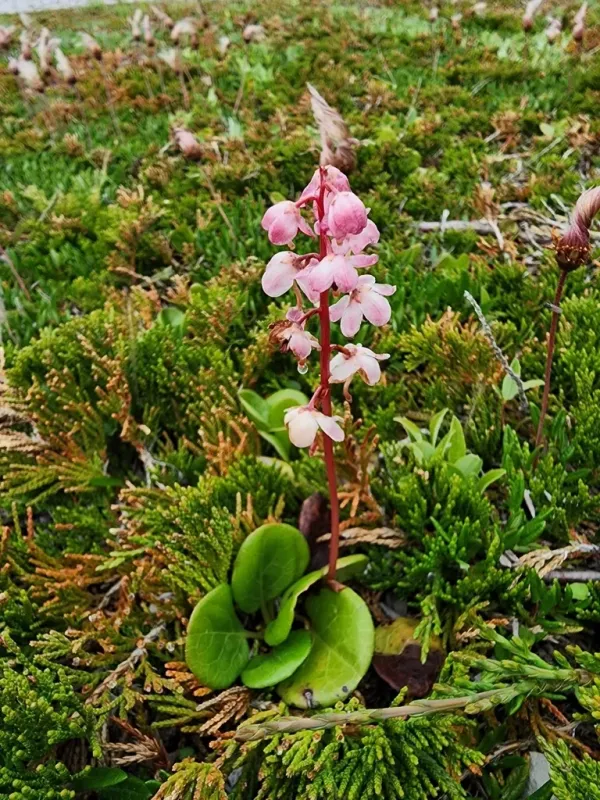
Description
Growing requirements
Liverleaf wintergreen (Pyrola asarifolia) is a perennial herbaceous plant belonging to the family Ericaceae. It is native to various forest regions in the Northern Hemisphere, often found in cool, moist habitats.
The plant is characterized by its basal rosettes of evergreen, leathery, dark green leaves that have a distinct kidney-like shape, leading to its common name and specific epithet.
Growing Pyrola asarifolia successfully requires mimicking its natural environment: acidic soil, consistent moisture, and a shady, sheltered location protected from direct sunlight.
While not a traditional agricultural crop, it is cultivated in specialized nurseries for its medicinal properties and as an ornamental choice for wild-style forest gardens.
Maintenance involves ensuring the soil remains moist but not waterlogged, as the plant relies on a symbiotic relationship with soil fungi to thrive in its native forest ecosystem.
Main diseases and pests
The primary threats to Liverleaf wintergreen in cultivation are fungal diseases such as leaf spots and root rots, which thrive in stagnant, excessively wet environments.
Poor ventilation and high humidity without adequate airflow can significantly increase the susceptibility of the foliage to powdery mildew outbreaks during the growing season.
Garden pests, including slugs and snails, find the succulent-like leaves attractive and can cause severe damage if left unmanaged in a moist garden environment.
Soil-borne pathogens may also impede growth, particularly when the root system is stressed by fluctuating moisture levels or poor soil structure.
Effective management includes maintaining optimal spacing between plants, ensuring a well-drained substrate, and practicing diligent sanitation to prevent the spread of pathogens.