
Green-flowered wintergreen
Pyrola chlorantha
Description
Growing requirements
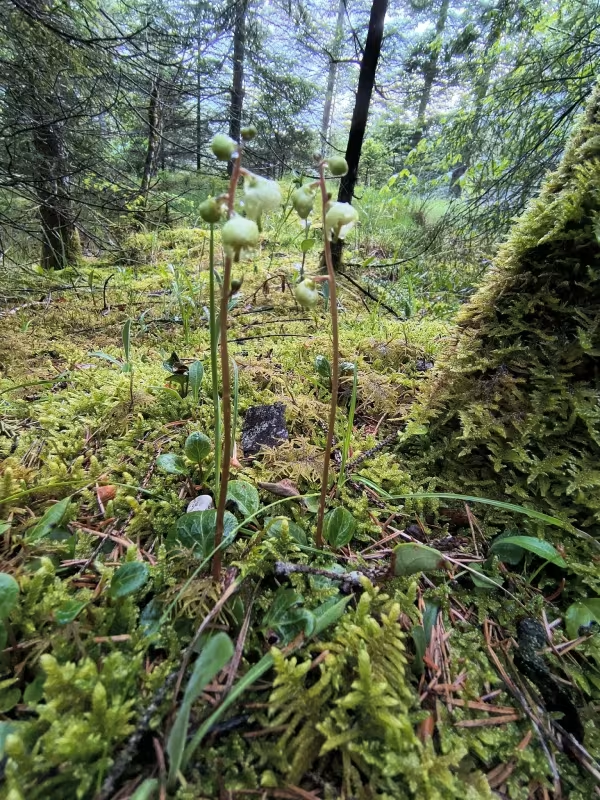
Pyrola chlorantha, known as the green-flowered wintergreen, is a perennial herbaceous plant belonging to the Ericaceae family. It is typically found in coniferous and mixed forests, forming small, dense colonies in areas with deep organic litter.
The plant is highly dependent on mycorrhizal fungi for nutrient absorption. This obligate symbiosis makes it extremely difficult to cultivate using standard agricultural methods, as it requires the specific soil microbiome found only in mature forest soils.
Regarding soil requirements, this species favors well-drained, acidic, and humic-rich substrates. It thrives in shaded or semi-shaded environments where light intensity is filtered through the forest canopy, preventing excessive heat stress.
Climate adaptability is limited to cool, temperate regions. The plant requires consistent moisture throughout the growing season and a period of winter dormancy. Dry conditions, especially in the spring, are detrimental to the development of its inflorescence.
Economically, the plant is primarily used in traditional herbal medicine for its various secondary metabolites. However, it is not considered an agricultural crop due to its slow growth rate and the complexity of maintaining its specific ecological needs in artificial environments.
Main diseases and pests
The primary threats to Pyrola chlorantha include the destruction of forest habitats, logging, and soil compaction, which disrupts the delicate fungal networks essential for the plant's survival.
Pathogenic threats include various root rots that proliferate in waterlogged conditions. When the mycorrhizal balance is disturbed, opportunistic fungi can quickly overwhelm the wintergreen's root system.
Pests typically include foliage-feeding insects such as beetles, which can significantly reduce photosynthetic surface area during the early stages of the growing season.
Environmental stress, particularly soil acidification from pollution or sudden climate shifts, directly impacts the plant's ability to maintain its symbiotic relationships.
Due to these factors, research into large-scale cultivation remains limited, focusing instead on conservation efforts to protect existing wild populations from degradation.