
Japanese wintergreen
Pyrola japonica
Description
Growing requirements
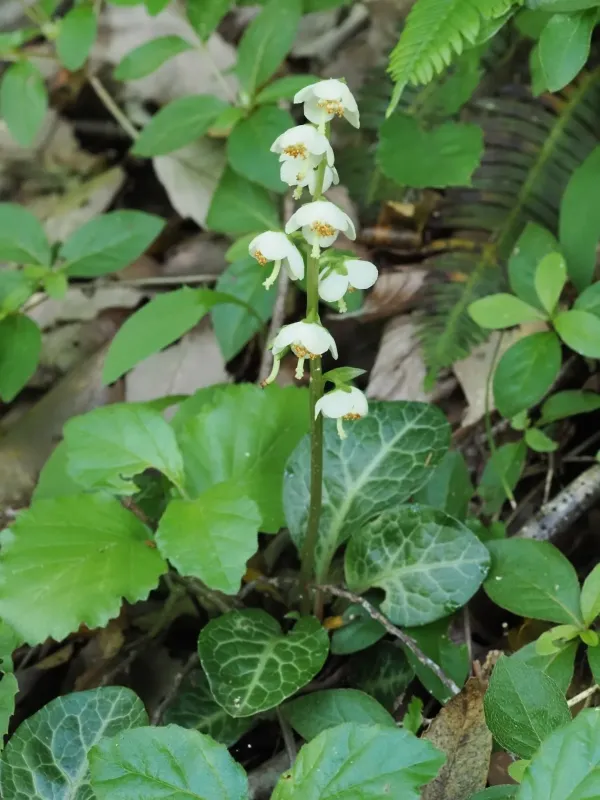
Japanese wintergreen (Pyrola japonica) is a perennial herbaceous plant belonging to the Ericaceae family. It is a shade-tolerant species naturally occurring in dense woodland environments, where it adapts to low light conditions and cool temperatures.
The plant features a basal rosette of coriaceous leaves that remain green throughout the season. Its growth habit relies on creeping rhizomes, which allow the plant to spread across the forest floor, utilizing leaf litter as a primary nutritional source.
Regarding cultivation requirements, this species demands acidic, well-drained, and humus-rich soils. It does not tolerate direct sun exposure or dry environments, requiring consistent moisture and protection from wind to prevent tissue dehydration.
The natural range of Pyrola japonica spans across East Asia, including Japan, Korea, and parts of the Russian Far East. It thrives in regions characterized by humid, seasonal climates where winter dormancy is supported by a stable snow cover.
In terms of agricultural and economic value, this plant is cultivated primarily for its pharmacological properties. It is a staple in traditional Asian herbal medicine, recognized for its anti-inflammatory and antiseptic effects on the human body.
Main diseases and pests
The primary threats to Japanese wintergreen include habitat loss due to deforestation and significant changes in soil microclimate. Soil compaction and pollution are critical factors that hinder the regeneration of wild plant populations.
Disease outbreaks, specifically fungal pathogens like Pythium and Rhizoctonia, pose a significant risk to nursery-grown or cultivated plants. These infections typically manifest as root rot following periods of poor drainage.
Pest pressure from gastropods like slugs and snails represents a constant threat in shaded, humid garden beds. These pests can rapidly destroy the evergreen leaves, reducing the plant's ability to produce energy through photosynthesis.
Integrated pest management in Pyrola japonica production focuses on maintaining optimal hygiene and avoiding the use of systemic pesticides. Biological control agents and manual removal of infected debris are the preferred management strategies.
Environmental stress, such as extreme heat or frost heaving, can also weaken plant stands, making them more susceptible to opportunistic secondary infections. Proper site selection remains the most effective preventive measure against various biotic and abiotic threats.