
Pycreus mundtii
Pycreus mundtii
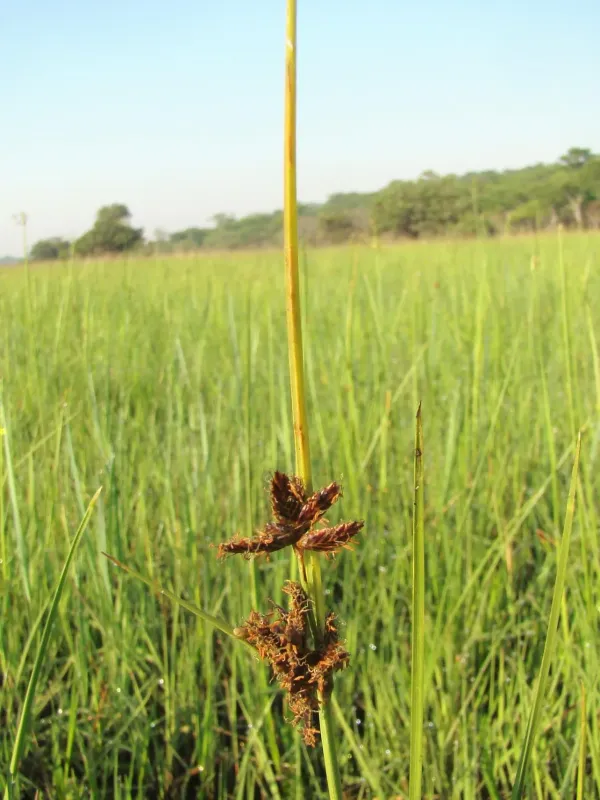
Description
Growing requirements
Pycreus mundtii is a perennial herbaceous plant belonging to the Cyperaceae family. It is naturally adapted to wetland environments, thriving in habitats where water saturation is consistent throughout the growing season.
Agronomic requirements center on high soil moisture levels. The plant performs best in hydromorphic soil types, making it a niche crop for areas prone to flooding or specifically managed wetlands where traditional arable crops cannot survive.
Regarding climate, the plant exhibits a preference for tropical and subtropical temperature ranges. It requires a long, warm growing season to achieve maximum biomass production, as cold stress significantly limits its physiological activities and overall development.
Its botanical structure includes a robust rhizomatous root system, allowing for dense colonizing growth patterns. The foliage consists of triangular stems typical of the sedge family, which provide a high volume of vegetative material suitable for various industrial or agricultural applications.
Host-plant utility is primarily focused on environmental conservation. It is frequently employed for soil stabilization in riparian zones and serves as a natural biological filter for water purification in constructed wetland systems used for agricultural runoff management.
Main diseases and pests
The primary threats to Pycreus mundtii include fungal pathogens such as root rot, especially when water temperatures drop significantly. Poor water movement within the soil can exacerbate these conditions, leading to plant decline.
Pest pressures are generally low but include specialized aquatic insects and certain mite species that may target the succulent stem tissues. Maintaining ecological balance and avoiding water stagnation during cold spells are critical strategies for managing these threats.