
Pycreus lanceolatus
Pycreus lanceolatus
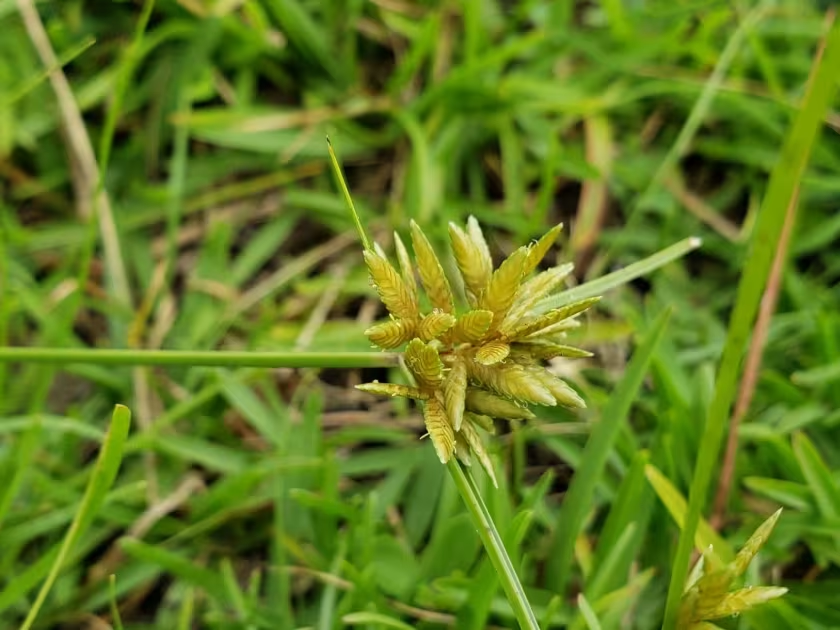
Description
Sowing dates
Pycreus lanceolatus is a member of the Cyperaceae family, well-adapted to habitats where moisture availability is consistently high throughout the year.
Propagation is primarily achieved through seeds which disperse efficiently in aquatic environments, although vegetative methods using rhizome division are more effective for agriculture.
When planting, it is recommended to ensure a shallow seed depth or use root divisions planted directly into mud to allow for rapid establishment in the new substrate.
Spacing between individual plants should be carefully managed to avoid resource competition, typically requiring moderate density to ensure healthy growth patterns.
Optimal planting time begins in early spring, allowing the root system sufficient time to establish before the peak of the growing season temperatures arrive.
Growing requirements
This species is a quintessential hydrophyte, thriving in environments that feature saturated soil conditions or shallow standing water sources.
Soil composition should be rich in organic matter, such as alluvial or clay-heavy soils, which are commonly found in natural marshlands and riparian zones.
Exposure to full sunlight is critical for Pycreus lanceolatus, as the plant requires intensive solar radiation to sustain its high metabolic rate in wet conditions.
Environmental climate should be tropical or subtropical, characterized by minimal frost risk, as the plant is not structurally adapted to survive extreme winter freezing.
Regular monitoring of water pH and nutrient content ensures the plant maintains vigor, as the species is sensitive to chemical runoff and heavy pollution.
Yield
While often treated as a wild species, Pycreus lanceolatus can produce significant biomass suitable for use as supplementary animal feed in flooded pastoral areas.
Total yield depends largely on the consistency of the hydration regime and the fertility of the underlying soil, which dictates the rate of vegetative regrowth.
Studies indicate that under favorable conditions, multiple harvests per season are possible, allowing for a steady supply of biomass for local agricultural needs.
The plant serves as a valuable resource for land reclamation projects, where its biomass productivity helps stabilize soil and filter nutrient loads in wetland habitats.
Efficiency in harvesting contributes to better management of wetland zones, turning areas previously considered unproductive into valuable agricultural resource sites.
Main diseases and pests
The primary threats to Pycreus lanceolatus cultivation are fungal pathogens such as smut or rust, which thrive in stagnant, humid environments without proper water circulation.
Pests such as aquatic weevils and various insect larvae can damage stems and roots, potentially compromising the overall health of the planting population.
Sustainable management requires integrated pest control methods, focusing on biological deterrents to maintain the ecological balance of the wetland site.
Invasive weed encroachment can pose a significant threat to young plantations, necessitating early weeding to ensure the crop establishes dominance in the habitat.
Environmental stress, particularly sudden changes in water levels or contamination by chemical pollutants, remains a major risk factor for large-scale production.
Harvesting
Harvesting should be timed to coincide with the plant's peak vegetative state, usually just before the development of reproductive seed heads for optimal nutrition.
Mechanical harvesting equipment specifically designed for wetlands should be used to cut biomass at a height that preserves the plant's basal meristems for regrowth.
Post-harvest handling is critical; biomass must be moved quickly to drying or processing areas to prevent decay due to the plant's high moisture content at harvest.
Strategic timing during the dry season or receding flood cycles facilitates easier access for machinery and increases the efficiency of the harvest operation.
Proper logistical planning ensures that the biomass is utilized effectively, whether for forage, composting, or other agricultural purposes, reducing waste to a minimum.