
Yellow flatsedge
Pycreus flavescens
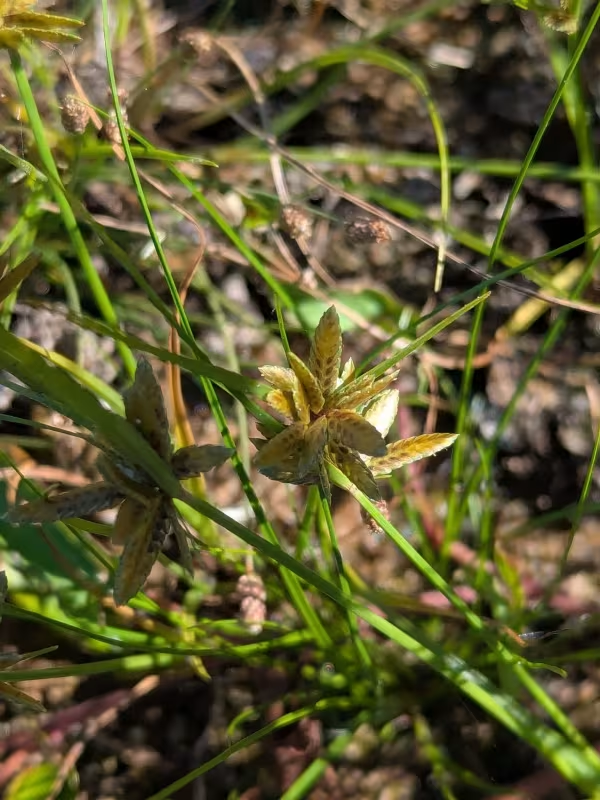
Description
Growing requirements
Yellow flatsedge (Pycreus flavescens) is a herbaceous perennial plant belonging to the Cyperaceae family. It is typically found in habitats characterized by high moisture content, such as stream banks, wetlands, and damp meadows.
The plant demonstrates a strong preference for environments with stable moisture levels. It thrives in soils that are consistently moist throughout the growing season, showing high adaptability to the fluctuating water levels of riparian zones.
Regarding light requirements, this species requires full sun exposure to maintain vigorous growth and produce characteristic yellow-tinged inflorescences. Shaded environments negatively impact its ability to complete its reproductive cycle effectively.
Soil quality is a critical factor for successful establishment. Yellow flatsedge prefers nutrient-rich substrates, such as silt or moist sandy soils. It can tolerate slightly varying pH levels, provided that the moisture availability remains constant and sufficient for its extensive root system.
The botanical structure of the plant consists of upright stems forming dense clumps. This architecture serves a practical purpose in erosion control, stabilizing the soil along water bodies and helping to maintain the integrity of the ecosystem where it grows.
Main diseases and pests
Environmental degradation, particularly the drainage of wetlands and the lowering of water tables, represents the most significant threat to this species. Without adequate moisture, the plant cannot sustain its physiological needs and eventually dies out.
The species is susceptible to various fungal pathogens that thrive in high-humidity environments. These infections typically manifest as leaf blight, which can reduce the plant's overall vigor and interfere with its ability to store energy for the next season.
Insects that specialize in feeding on sedges can cause significant damage to the floral parts and stems of the yellow flatsedge. Such pest pressure can lead to poor seed production and decreased genetic diversity within the plant population.
Inter-species competition is a constant challenge for this plant. More aggressive weed species can quickly overshadow the yellow flatsedge, depriving it of the necessary sunlight and nutrients, especially in the early stages of its establishment.
Chemical runoff from nearby agricultural activities can be detrimental to the plant. Due to its sensitivity to many common herbicides, the yellow flatsedge is easily damaged by standard weed control practices employed in surrounding fields or landscaped areas.