
Purslane
Portulaca oleracea L.
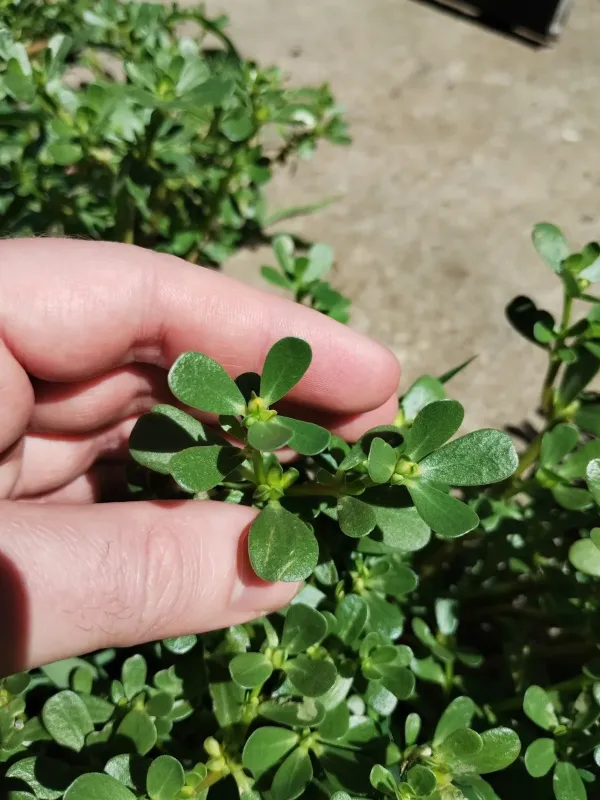
Description
Sowing dates
Common purslane (Portulaca oleracea L.) is a succulent annual plant belonging to the Portulacaceae family, which thrives in warm, sunny weather conditions.
Sowing in open ground should only occur after the last frost date, as the plant requires soil temperatures to be consistently above 15–20 degrees Celsius.
In warmer climates, direct seeding can start in late spring; in cooler regions, starting plants under protective covers or in a greenhouse is highly recommended.
Since the seeds are extremely small, they should be sown on the surface and lightly pressed into the soil without burying them deep, as they need light to germinate.
Successive sowings every two to three weeks allow for a continuous harvest of fresh, succulent leaves and tender stems throughout the summer growing season.
Growing requirements
Purslane requires full sun exposure to maintain its compact growth habit; shading will cause the stems to stretch and reduce the quality of the edible greens.
The plant is highly adaptable to various soil types but thrives best in light, sandy, or loamy soils that provide excellent drainage and allow roots to breathe.
While known for its drought tolerance, regular irrigation is vital if the objective is to produce succulent leaves rather than just hardy garden growth.
Optimal temperatures for rapid development range between 25 and 30 degrees Celsius; growth significantly slows down when temperatures drop below 15 degrees.
Good air circulation is necessary to prevent high humidity from causing fungal issues, especially if the plants are grown in dense clusters or under covers.
Yield
With proper care and consistent watering, purslane can yield approximately 1–2 kilograms of fresh greens per square meter from a single cutting.
Under an intensive production system with controlled nutrient supply, growers can often obtain up to 3–4 harvests from the same set of plants per season.
Yield potential is optimized by maintaining a planting density of 30 cm between rows and ensuring plants are spaced 10–15 cm apart within each row.
It is important to harvest before the plant enters its flowering stage, as once it starts producing seeds, the vegetative growth and taste quality decline.
The harvest is highly versatile, with the plant being used fresh in salads, cooked in soups, or pickled to preserve its unique, slightly acidic flavor profile.
Main diseases and pests
Common purslane is naturally robust, but it can be susceptible to fungal diseases like white rust, especially in areas with poor drainage and high humidity.
Root rot is the most common threat when the soil remains too wet, which can quickly lead to the decline of the plant population in the garden bed.
Pests such as aphids may occasionally cluster on tender new shoots, though they are usually managed by maintaining healthy plant vigor and natural predators.
Because the production cycle is very short, the use of chemical pesticides should be avoided in favor of cultural practices and integrated pest management.
- Implementing crop rotation to prevent soil-borne pathogen buildup.
- Thinning plants to ensure proper airflow around the stems.
- Removing debris and weeds that might harbor unwanted insects.
Harvesting
The first harvest usually takes place 25 to 30 days after sowing, once the plants have established and reached a height of about 10 to 15 centimeters.
Harvesting is performed by pinching or cutting the terminal stems, which encourages the plant to branch out and produce more growth for subsequent harvests.
The best time for gathering is in the early morning to ensure the plants are fully turgid, resulting in better shelf life and superior visual quality.
Post-harvest, purslane is quite perishable and should be refrigerated or processed quickly to maintain its characteristic crispness and nutritional value.
For long-term storage, the greens can be pickled using a vinegar-based brine with herbs, a common method used to enjoy the plant throughout the off-season.