
Ptisana salicina
Ptisana salicina
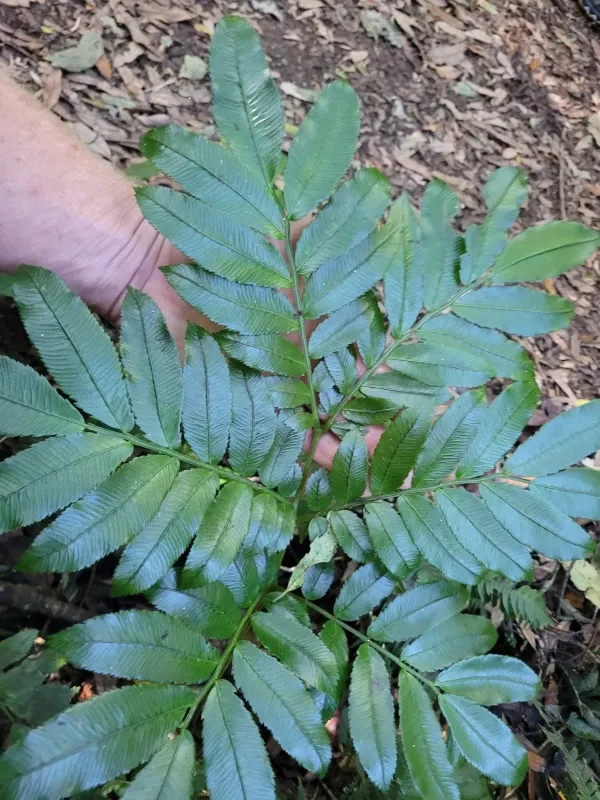
Description
Growing requirements
Ptisana salicina, commonly known as the king fern or horseshoe fern, is a large, primitive fern belonging to the Marattiaceae family. It is native to the humid forests of the South Pacific, including New Zealand and various island groups, thriving in shaded and high-humidity microclimates.
The plant demands a stable tropical environment characterized by consistently warm temperatures throughout the year. It lacks cold tolerance, making protection from frost and cold winds essential for its survival in any cultivation attempt.
Soil requirements focus on high organic content and excellent drainage, mirroring the forest floor environment where leaf litter decomposition provides constant nourishment. A porous substrate that retains moisture without becoming waterlogged is ideal for root development.
Humidity is the most critical factor for the successful growth of this species. In agricultural or greenhouse settings, constant misting systems are often employed to maintain the ambient moisture levels required for the expansion of its massive fronds.
Cultivation practices involve carefully managed shade, as direct sunlight can cause significant tissue damage to the leaves. Growers often use artificial shade cloth or intercropping methods under taller canopy trees to protect the ferns.
Harvesting
Historically, Ptisana salicina has been utilized as a food source, particularly for its large, starchy rhizomes. These rhizomes were a significant dietary component for indigenous cultures in the Pacific, providing essential carbohydrates after proper processing.
Processing is a mandatory step, as the rhizomes are typically baked for extended periods in earth ovens. This thermal treatment is necessary to break down complex compounds and ensure the material is palatable and safe for consumption.
Young fronds, often referred to as croziers, are also harvested at a tender stage. They are traditionally prepared as a leafy vegetable, offering a distinct flavor profile that has been appreciated by local communities for generations.
Harvesting strategies are typically sustainable and low-intensity, given the slow growth rate of the plant. Harvesters carefully remove only portions of the rhizome or limited fronds, ensuring the parent plant remains viable for future cycles.
While not a primary global commercial crop, Ptisana salicina remains a subject of great interest in ethnobotany. Its role in traditional agricultural systems highlights the importance of preserving indigenous plant knowledge and biodiversity.