
Dinner Plate Tree
Pterospermum acerifolium
Description
Growing requirements
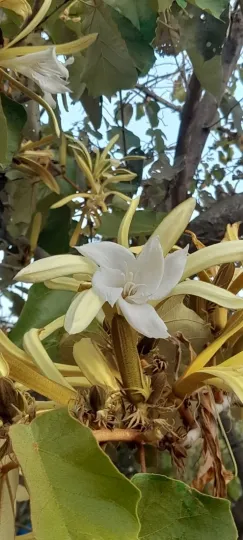
The Dinner Plate Tree belongs to the Malvaceae family. It is a massive evergreen tree known for its impressive size, reaching heights of up to 30 meters, and its large, distinctive maple-like leaves.
Native to tropical and subtropical regions of Southeast Asia, the species thrives in warm climates. It requires consistent high humidity and shelter from harsh, freezing weather conditions to flourish.
For optimal development, the tree requires fertile, well-draining soil. It prefers a slightly acidic to neutral substrate, which allows deep root penetration while preventing waterlogging issues.
In terms of light requirements, the species favors full sun to partial shade. Ensuring adequate light exposure is critical for the tree to maintain its density and healthy green foliage color.
Agricultural maintenance involves regular monitoring of soil moisture, especially during the seedling stage, and the application of balanced fertilizers to support the rapid development of its sturdy trunk.
Yield
The primary utility of this tree lies in its timber, which is valued for its durability and strength. It is commonly utilized in local carpentry and the manufacturing of high-quality furniture.
The large flowers are highly ornamental and aromatic, making them a significant asset in botanical gardens and public landscapes intended for shade production and aesthetic improvement.
In traditional practices, the leaves of the tree are used as eco-friendly, biodegradable plates, from which the plant derives its common name, showcasing its role in sustainable cultural practices.
The bark of the tree contains fibers that have been traditionally used in rope making and local weaving, proving the multipurpose nature of the species in rural economies.
Pharmacological research continues to explore the potential of various plant extracts from Pterospermum acerifolium, which show promise in providing natural compounds for health-related applications.
Main diseases and pests
Fungal infections represent the most significant threat to the tree, particularly when cultivated in environments with poor air circulation or excessive soil moisture leading to root rot.
Leaf-eating pests and caterpillars are common threats that can affect the health of young saplings. Infestations typically occur during the wet season, requiring active monitoring and intervention.
Poor site selection, including areas with limited drainage or intense cold winds, often results in stunted growth and leaves the plant susceptible to secondary biological stressors.
Integrated pest management strategies are recommended to keep the population of harmful insects under control, using eco-friendly sprays where appropriate to maintain ecological balance.
Proper pruning practices are essential to remove dead or diseased wood. This reduces the likelihood of infection spreading and ensures that the tree maintains a healthy structural architecture over time.