
Pterocaulon lanatum
Pterocaulon lanatum
Description
Growing requirements
Pterocaulon lanatum is a perennial herbaceous plant belonging to the Asteraceae family. It is native to Australia, where it thrives in savannahs and open woodlands, showing high adaptation to extreme environmental fluctuations and heat.
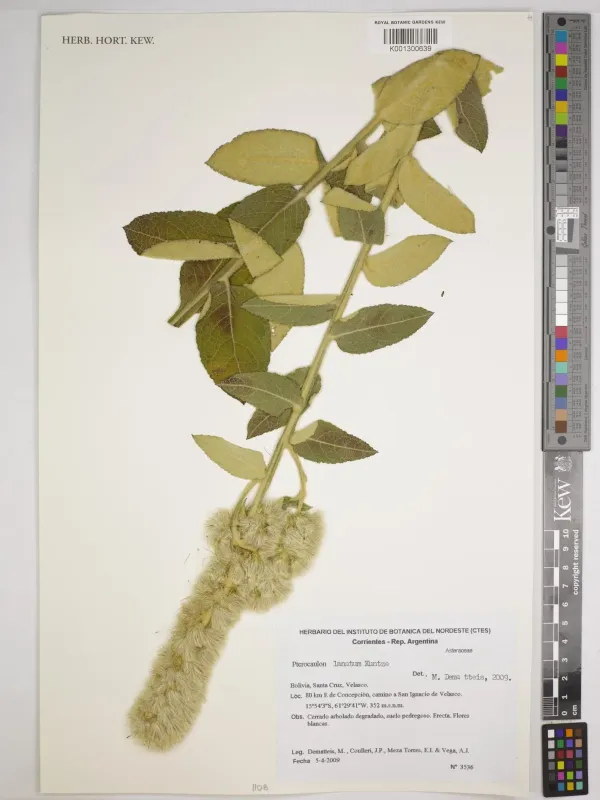
The botanical structure of the plant is defined by its characteristic woolly indumentum covering the stems and leaves. This layer serves as a vital adaptation to reduce water loss, allowing the plant to survive in arid environments where other species would struggle.
Optimal soil conditions for this crop include well-drained, sandy, or gravelly substrates. The plant is highly sensitive to root rot, so ensuring excellent drainage is the primary requirement for successful cultivation in controlled or commercial agricultural settings.
Regarding climate, Pterocaulon lanatum requires a long frost-free growing season and full sun exposure. It is well-suited to hot, arid, or semi-arid climates where temperatures remain high throughout the day and night during the active growth phase.
Economically, the plant is primarily studied for its secondary metabolites, which possess potential pharmacological properties. Additionally, its drought-resistant nature makes it a valuable candidate for xeriscaping and sustainable landscaping projects in regions facing water scarcity.