
Psydrax subcordata
Psydrax subcordata
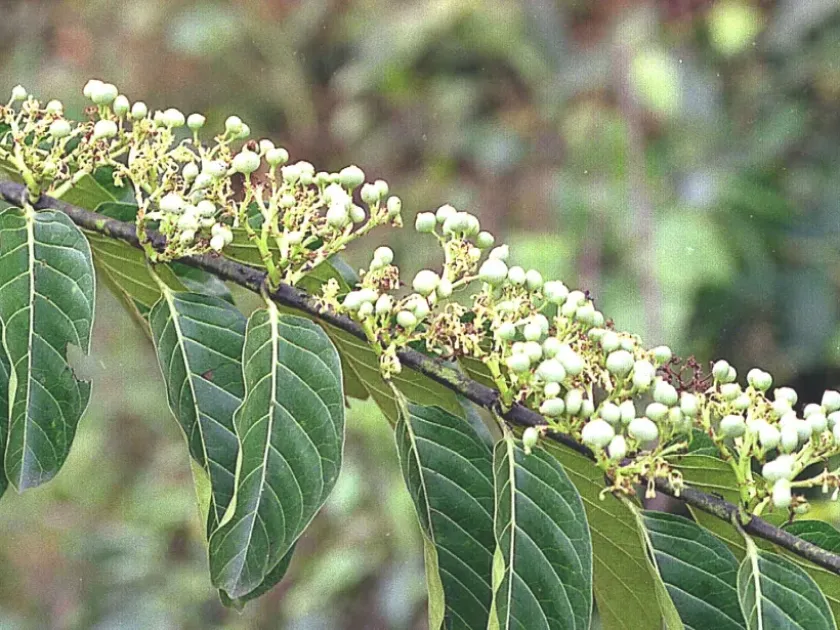
Description
Growing requirements
Psydrax subcordata is a perennial woody plant belonging to the Rubiaceae family. Characterized by its robust growth and glossy, subcordate foliage, this species is a prominent feature of tropical forests in West and Central Africa, providing essential ecological services.
The plant originates from humid tropical environments, requiring high levels of atmospheric humidity and consistent temperatures ranging from 22°C to 30°C. It is typically found in lowland rainforests where the canopy provides dappled shade during the early stages of its development.
Soil requirements for this species include well-drained, nutrient-rich substrates. While it shows some tolerance to varying soil textures, it thrives best in deep, loamy soils with a slightly acidic profile. Water management is critical; the soil should remain moist but never waterlogged.
Botanically, Psydrax subcordata produces small, fragrant flowers arranged in clusters, which eventually mature into small, fleshy drupes. These fruits play a vital role in local biodiversity, serving as a primary food source for various forest fauna and assisting in seed dispersal.
Commercially and traditionally, the plant is valued for its timber, which is durable and suitable for local construction and tool handles. Additionally, various parts of the plant, especially the bark, are processed in indigenous medicine for their potential pharmacological properties.
Main diseases and pests
The main threats to Psydrax subcordata include fungal pathogens that target the root system in poorly drained soils. Implementing proper planting techniques and maintaining adequate spacing helps in reducing the impact of damp-related diseases.
Pest management is focused on controlling leaf-feeding insects and spider mites, which can become problematic during dry spells. Cultural practices, such as maintaining plant health and hygiene, remain the most effective methods to prevent significant infestations.