
Psydrax obovatus
Psydrax obovatus
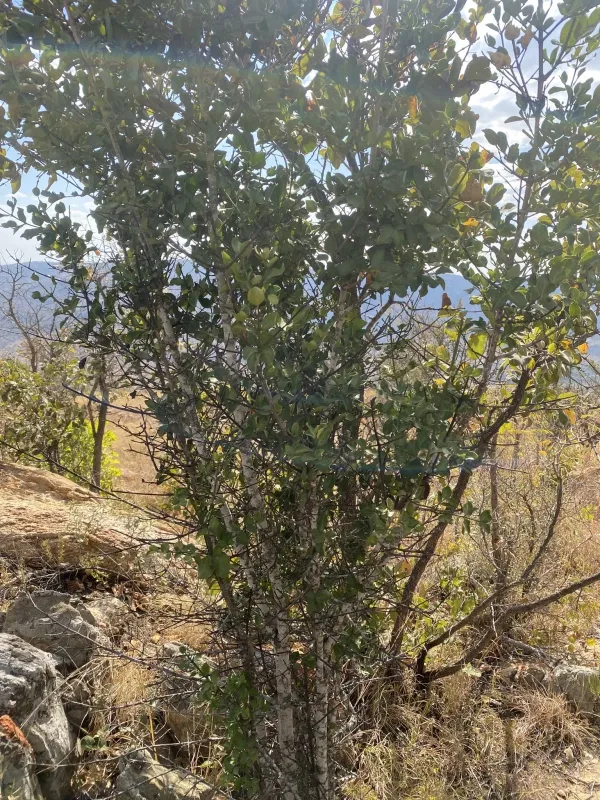
Description
Growing requirements
Psydrax obovatus is an evergreen tree or large shrub belonging to the Rubiaceae family. Native to the southern and eastern regions of Africa, it is widely recognized for its robust growth habit and dense, dark green foliage.
The species thrives in well-drained, nutrient-rich soils. While it can adapt to various soil types, including sandy loams, it performs best when the substrate is maintained with a neutral or slightly acidic pH balance to support active nutrient uptake.
Climatic requirements focus on warmth and consistent humidity levels. This plant is well-adapted to subtropical conditions and requires protection from frost, which can severely damage young, tender branches during its early development stages.
Sunlight exposure is critical for the healthy development of Psydrax obovatus. It prefers full sun or light dappled shade, which promotes the growth of its thick, glossy leaves and ensures a compact, aesthetic branching pattern.
Standard agrotechnical care involves regular irrigation during dry periods to prevent moisture stress. Additionally, applying a layer of organic mulch helps to stabilize soil temperatures and improve overall water retention in the root zone.
Harvesting
The primary horticultural application of this species is in landscape architecture. Its ability to be pruned into various shapes makes it an excellent candidate for hedges, privacy screens, and ornamental park displays.
In terms of wood utility, the timber is prized in local artisanal crafts for its density and fine texture. It is frequently utilized in the production of small wooden tools and various household carving projects.
Harvesting for propagation involves collecting mature fruit once they have reached their peak pigmentation. Seed extraction must be done carefully to maintain the viability of the embryos, which are used for nursery germination.
Ecologically, the tree serves as a vital resource for local biodiversity. Its fruit and dense canopy provide essential food and shelter for various avian species, contributing to a balanced ecosystem within managed agricultural landscapes.
Given the slow maturation rate of the species, the harvest of wood or biomass is managed through selective pruning rather than clear-cutting, ensuring that the tree remains a sustainable part of the landscape over several decades.