
White Wild Indigo
Baptisia alba (L.) Vent.
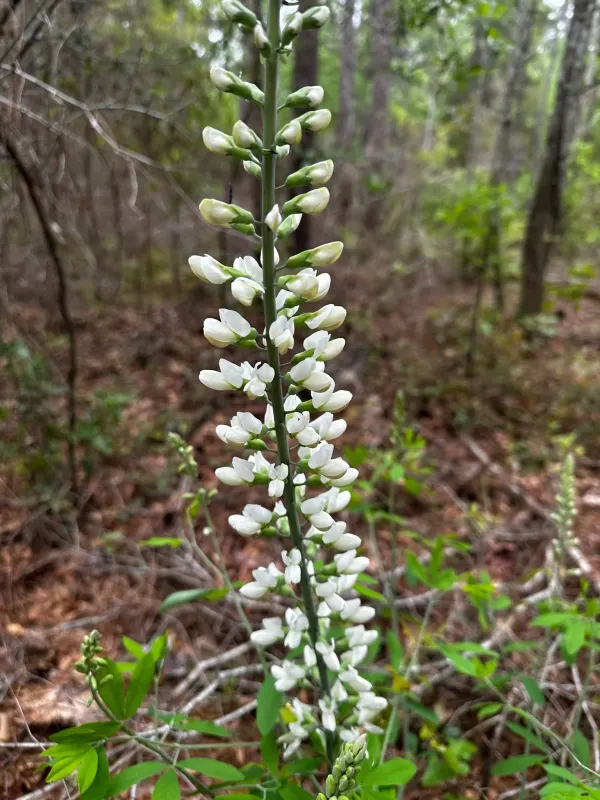
Description
Sowing dates
White Wild Indigo (Baptisia alba) is a long-lived perennial legume belonging to the Fabaceae family. Propagation is primarily achieved through seeds, which feature a hard, water-impermeable coat. Mechanical scarification is often required to improve germination rates significantly.
Fall seeding is the preferred method for commercial and small-scale cultivation, as it subjects the seeds to natural cold stratification. If spring planting is unavoidable, seeds must be treated with hot water or abraded to facilitate moisture absorption by the embryo.
Seeds are typically sown at a depth of 1 to 2 centimeters in well-prepared seedbeds. Adequate spacing of at least 50 to 60 centimeters is essential, as the plant matures into a large, woody-based structure that requires significant lateral expansion room.
During the first two years of development, the plant focuses its energy on deep root system establishment. As a result, above-ground growth is relatively slow. Proper weed management is critical during this establishment phase to ensure the seedlings are not outcompeted.
Transplanting mature specimens is not recommended due to the extensive taproot. Once established, these plants can persist for many years in the same location, making the initial site selection a key strategic decision for the producer.
Growing requirements
White Wild Indigo is highly adaptable but thrives best in full sunlight. It is natively found in prairies and woodlands across North America, indicating a preference for open, well-lit environments that support robust stalk development and flowering.
Soil requirements are relatively modest, as the plant prefers well-drained soils ranging from sandy loams to rocky substrates. It exhibits excellent tolerance to nutrient-poor soils, as it forms a symbiotic relationship with nitrogen-fixing bacteria, reducing the need for external fertilizers.
The plant is highly resilient to temperature fluctuations. It shows impressive cold hardiness, surviving harsh winter conditions without protection, and excels in hot, arid summer climates due to its deep root architecture that accesses deeper soil moisture.
Water requirements are highest during the first growing season. Once established, White Wild Indigo is exceptionally drought-tolerant. In fact, excessive soil moisture or standing water can lead to root degradation and should be avoided through proper site selection and drainage.
Fertilization management should be conservative. Excessive nitrogen application is detrimental, as it promotes lush vegetative growth at the expense of stalk strength, potentially leading to lodging and reduced structural integrity of the crop.
Main diseases and pests
White Wild Indigo is remarkably resistant to most major agricultural pests and diseases. Its natural biochemical composition acts as a defense mechanism against many common herbivores and soil-borne pathogens, making it an excellent candidate for low-input cropping systems.
Root rot is the most common disease, though it is almost exclusively associated with improper site conditions, such as poor drainage or persistent waterlogging. Ensuring optimal soil structure and site selection is the primary preventative measure.
In humid, stagnant air conditions, powdery mildew may occasionally appear on the foliage. Proper planting spacing ensures adequate air circulation, which is the best approach to mitigate this risk without relying on chemical fungicides.
Weevil species can occasionally cause damage to the seed pods. While they may impact seed yield, they rarely threaten the health of the entire plant, and biological control methods are typically sufficient to keep populations at negligible levels.
Overall, the plant represents a low-maintenance, ecologically stable crop that requires minimal intervention once established, making it a sustainable choice for field restoration or soil stabilization projects.