
Baptisia x variicolor
Baptisia x variicolor Kosnik et al.
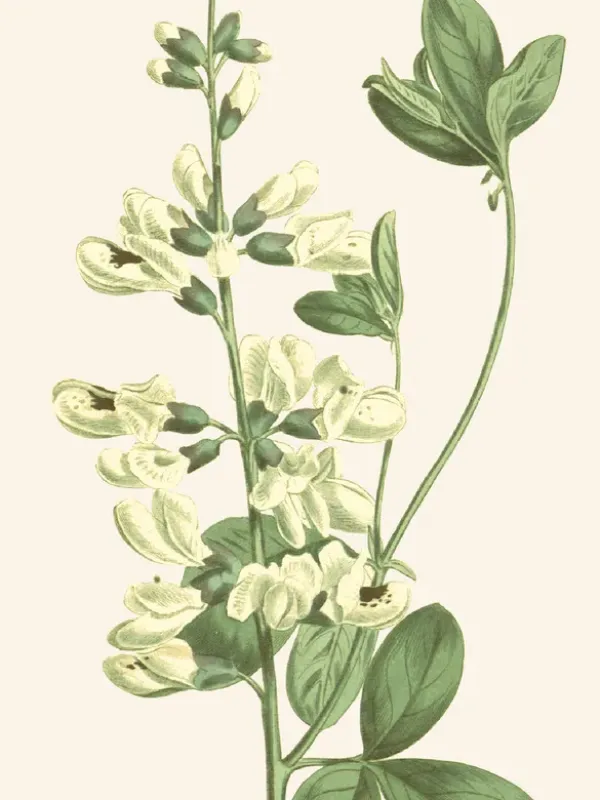
Description
Sowing dates
The propagation of Baptisia x variicolor is typically achieved through seed germination or vegetative division of mature clumps. Due to the hard seed coat, pre-treatment such as scarification or cold stratification is essential to ensure a high and uniform germination rate.
Sowing should ideally take place in early spring or late autumn. If started indoors, seeds require deep containers to accommodate the rapid development of the taproot, which is a characteristic feature of this species from the Fabaceae family.
When transplanting to the field, careful handling of the root system is mandatory. Because the plant develops a deep, woody taproot, it is highly sensitive to disturbance and should be planted in its permanent location as early as possible.
Spacing is critical for this crop. A distance of at least 70–80 cm between plants is required to prevent overcrowding. Proper spacing facilitates airflow, which is the most effective natural defense against foliage diseases.
In the first growing season, seedlings require supplemental watering until they are fully established. Once the root system is deep in the soil, the plant exhibits remarkable drought tolerance and can thrive with minimal human intervention.
Growing requirements
Baptisia x variicolor is a resilient perennial hybrid that thrives in full sun. It requires well-drained soil to prevent root issues, showing a preference for slightly acidic to neutral soil types that are moderately fertile.
The climate requirements for this plant are quite broad, as it is adapted to temperate regions with distinct seasons. It exhibits high winter hardiness, allowing it to survive frost and cold winters without special protection.
As a member of the Fabaceae family, it has the biological capability to fix atmospheric nitrogen. This ecological advantage makes it highly sustainable, reducing the necessity for supplemental nitrogen fertilizers.
Field maintenance is low, as the plant is naturally adapted to survive with limited input. Its deep root system allows it to reach water reserves in the lower soil horizons, making it a reliable crop for xeriscaping or low-maintenance agricultural plots.
Seasonal management involves clearing away dead foliage after the first heavy frost or in early spring. It is vital to perform this task before new growth emerges to avoid damaging the succulent shoots emerging from the root crown.
Main diseases and pests
The plant is highly resistant to typical agricultural pests due to the presence of secondary metabolites, such as quinolizidine alkaloids, which discourage most herbivorous insects and mammals from consuming it.
Disease pressure is generally low but is closely linked to soil moisture levels. Powdery mildew can occur in stagnant, humid environments where foliage remains damp for extended periods, reducing the photosynthetic efficiency of the plant.
Root rot is the most serious threat, occurring almost exclusively in poorly drained soils. Once the root system becomes compromised by pathogenic fungi in waterlogged conditions, recovery is usually difficult and often leads to the loss of the specimen.
Integrated pest management for this crop focuses on prevention rather than chemical intervention. Maintaining good soil structure, proper site drainage, and adequate plant spacing are sufficient to keep the population healthy and productive.
- Monitor for excess moisture around the base.
- Remove infected leaves to prevent spore spread.
- Avoid over-fertilizing with nitrogen to prevent excessive, weak growth.